


Our Holy Father Saint Augustine
“Doctor of Grace” and Author of our Holy Rule
Feastday: August 28
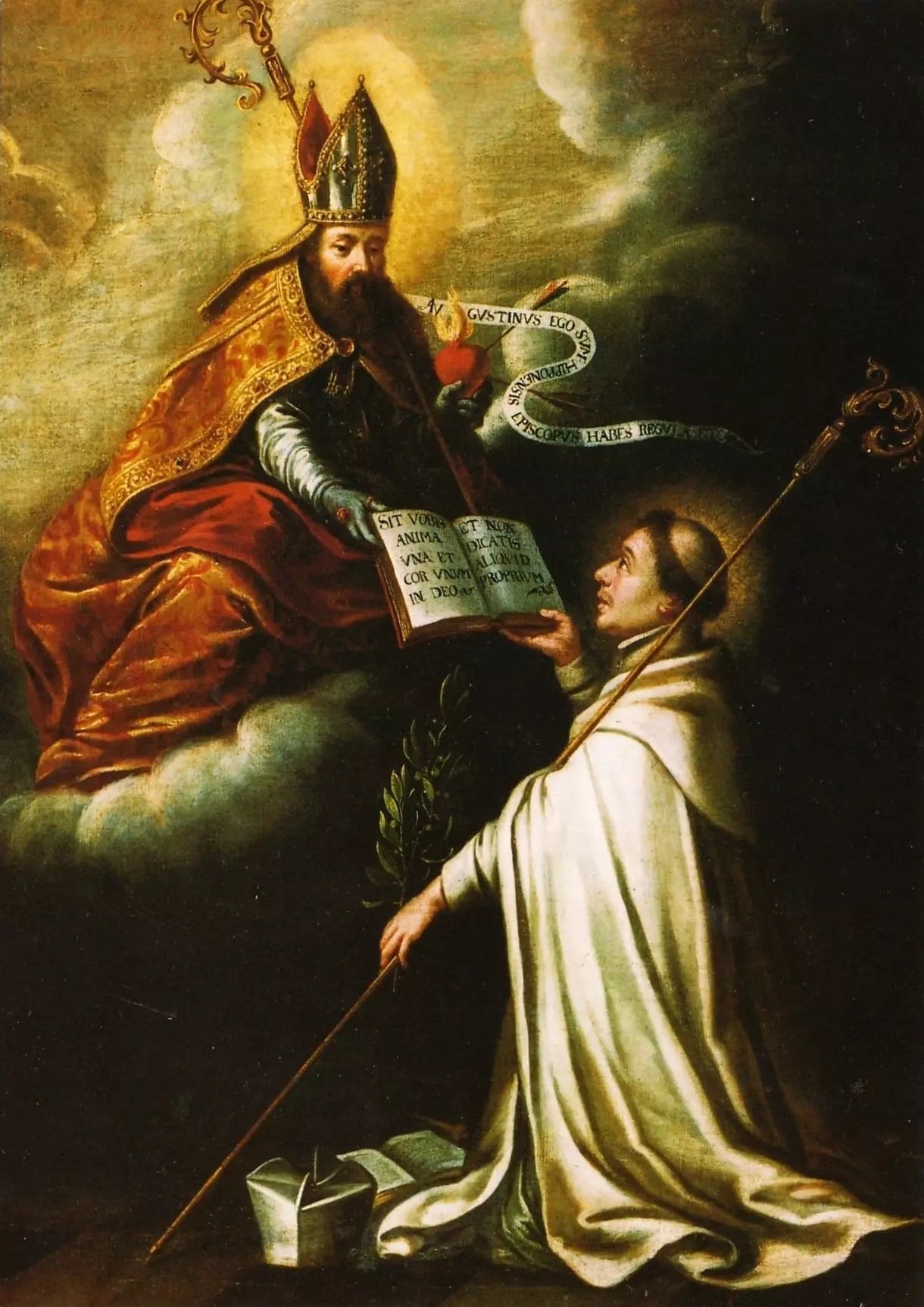
“I am Augustine, bishop of Hippo. Here is the Rule I wrote. If your brothers, who from now on will be my sons, fight nobly under its banner, they will be able to appear without fear before the tribunal of God.”(From a vision in which St. Augustine gave St. Norbert his Rule)
THE MONASTIC HEART OF SAINT AUGUSTINE

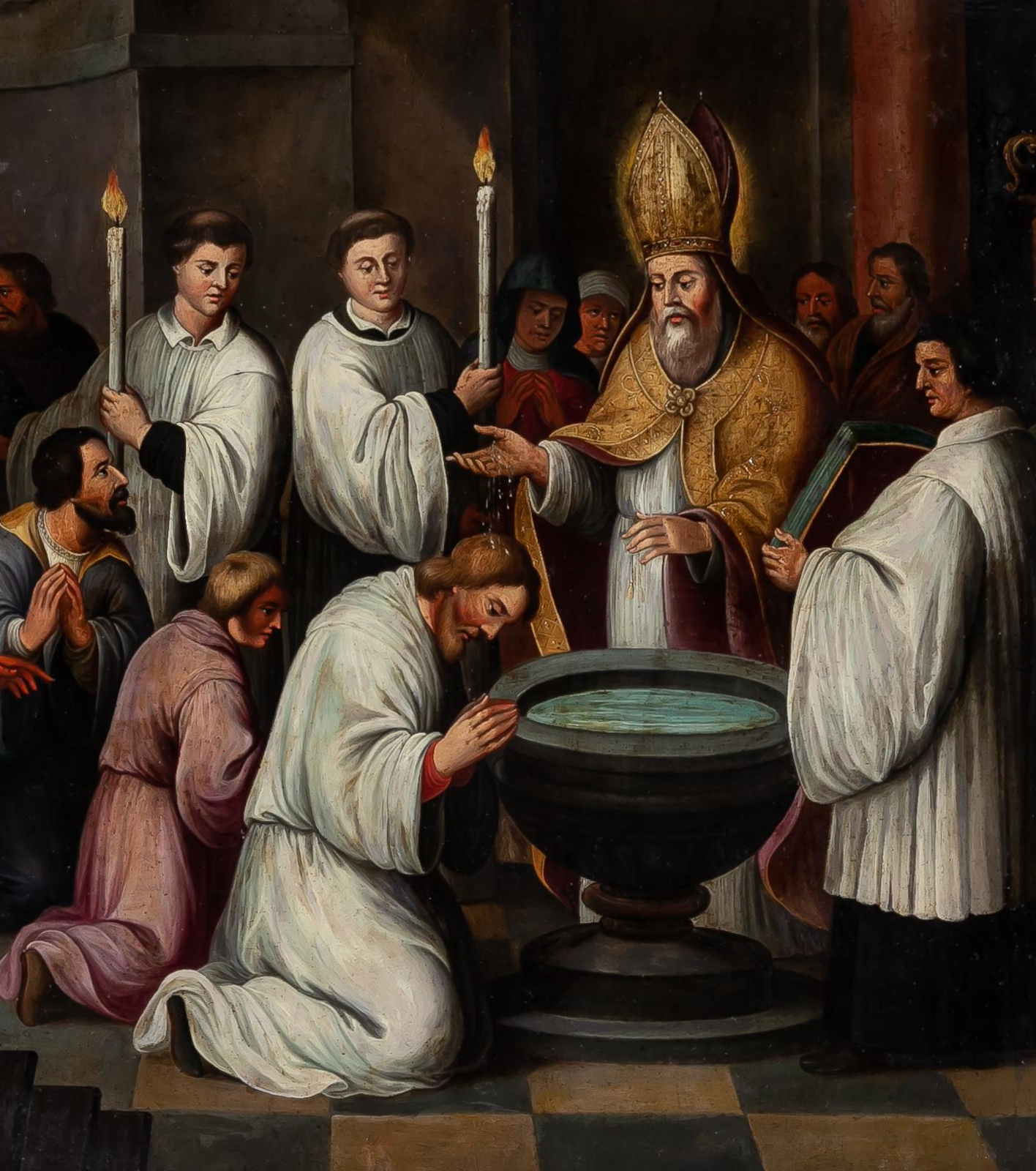
A brilliant and affable young man from Roman North Africa, Augustine was on his way to the heights of prestige in the Empire as an official imperial rhetor in 384 A.D. Once in Italy, however, something else captivated his heart: the truth and beauty of Christ in His Catholic Church, discovered through the sermons of St. Ambrose. Thanks to St. Ambrose's preaching and example and the ceaseless prayers of his mother, St. Monica, Augustine left behind his errors and his sinful lifestyle, receiving Baptism on April 24, 387. He never looked back —— except to praise God for freeing him from his bonds.
THE HEART OF HIS IDEAL?
The Monastic Community
While St. Augustine is well-known for his sublime and penetrating praise of God in the profoundly personal and interior account of his conversion, and his fame as one of the Church's greatest theologians and Doctors has spread far and wide, few know the secret of his burning love: from beginning to end, St. Augustine sought God in community, and his conversion to Christ went hand-in-hand with his embrace of the monastic life.
Even the great St. Ambrose, for all his eloquence, could not convert Augustine until he found Christian monasticism, and it was through the example of the unlearned monks that this proud intellectual was finally was shaken to the core and converted to God
For Augustine, the very name of “monk” (from monos, “one”) points to the unity of heart and soul of those in the monastic community, and this communio is a precious legacy he has bequeathed to us, his sons and daughters.
THE LIFE OF SAINT AUGUSTINE
Conversion
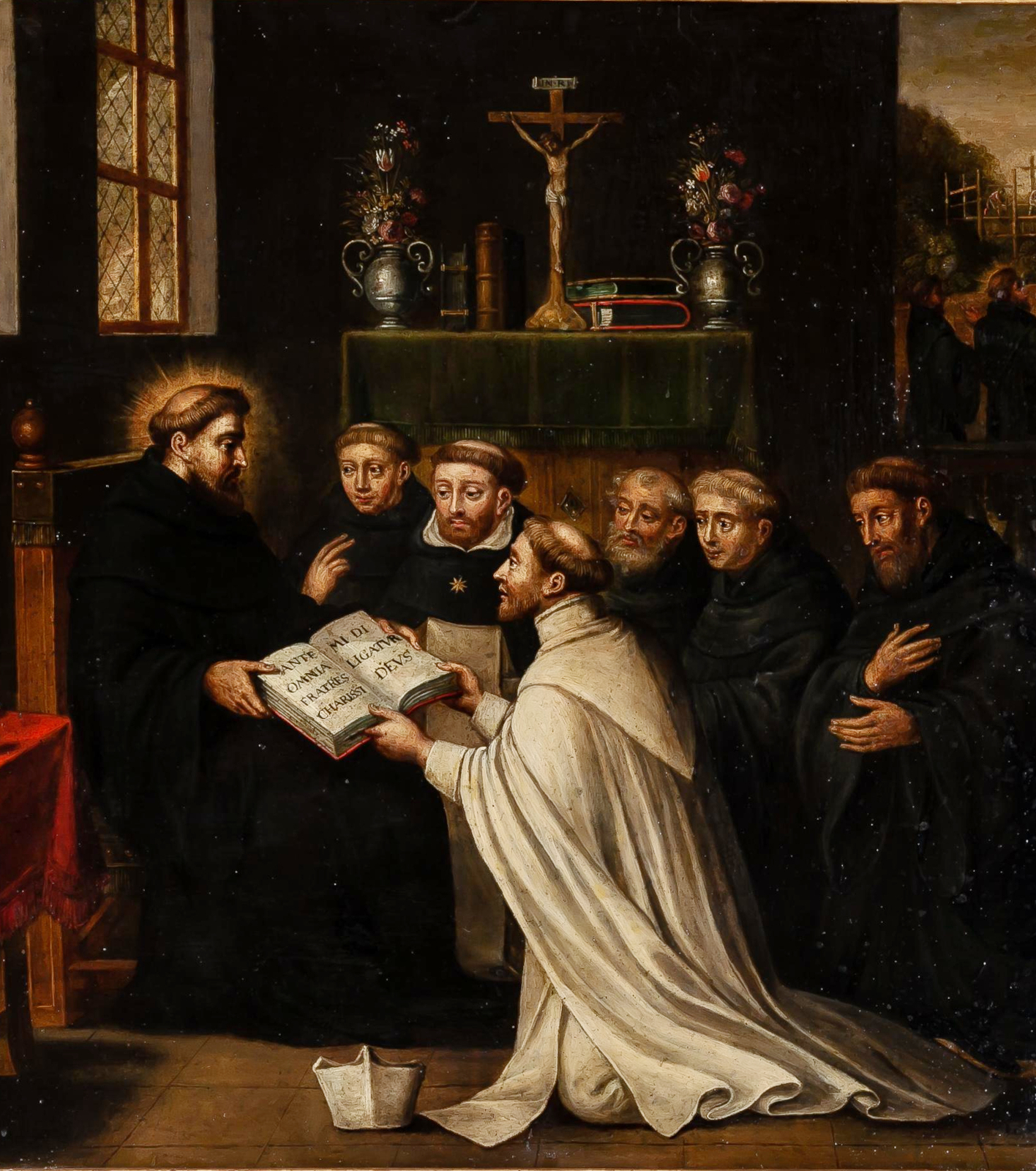
Monasticism
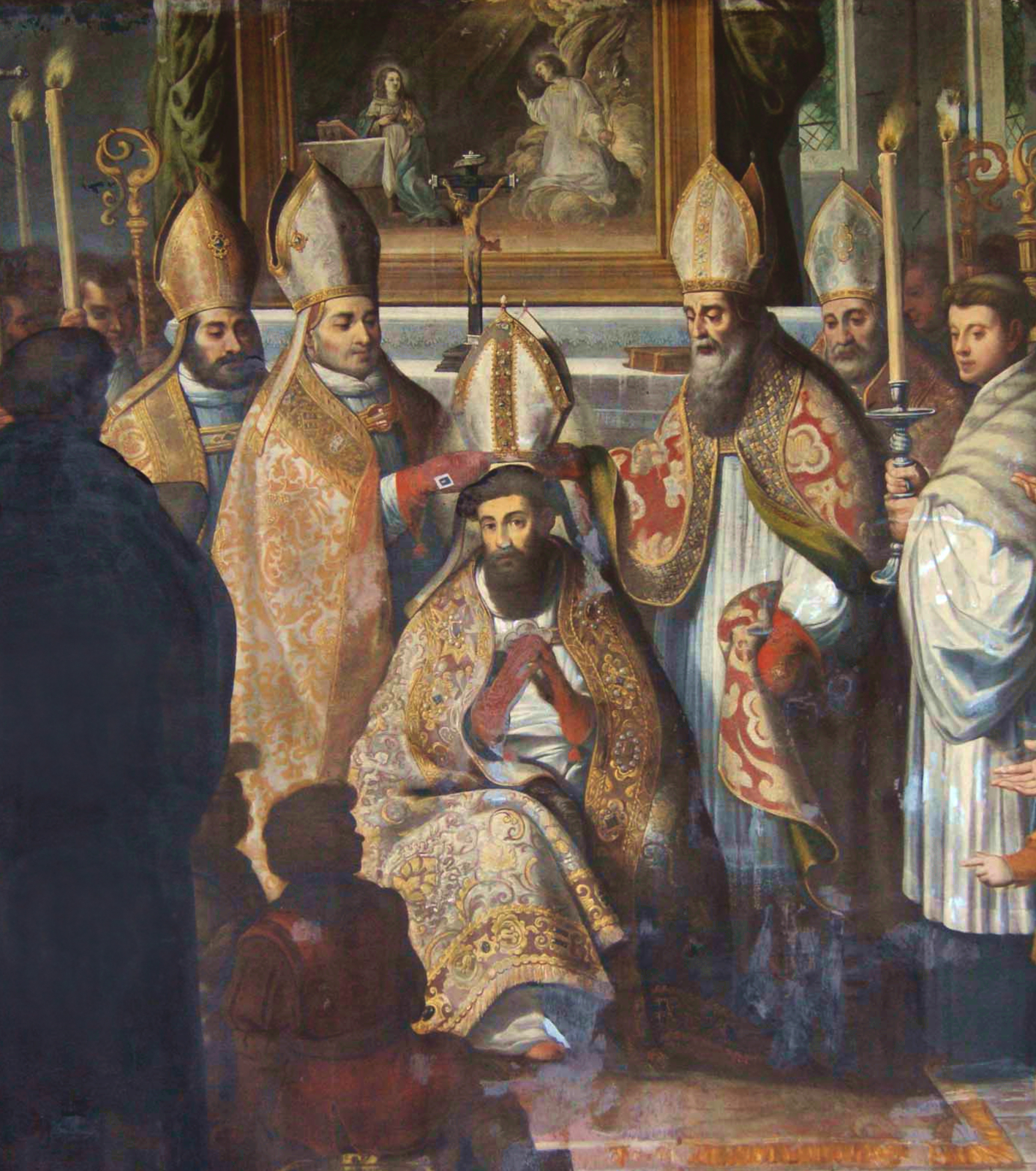
Episcopacy
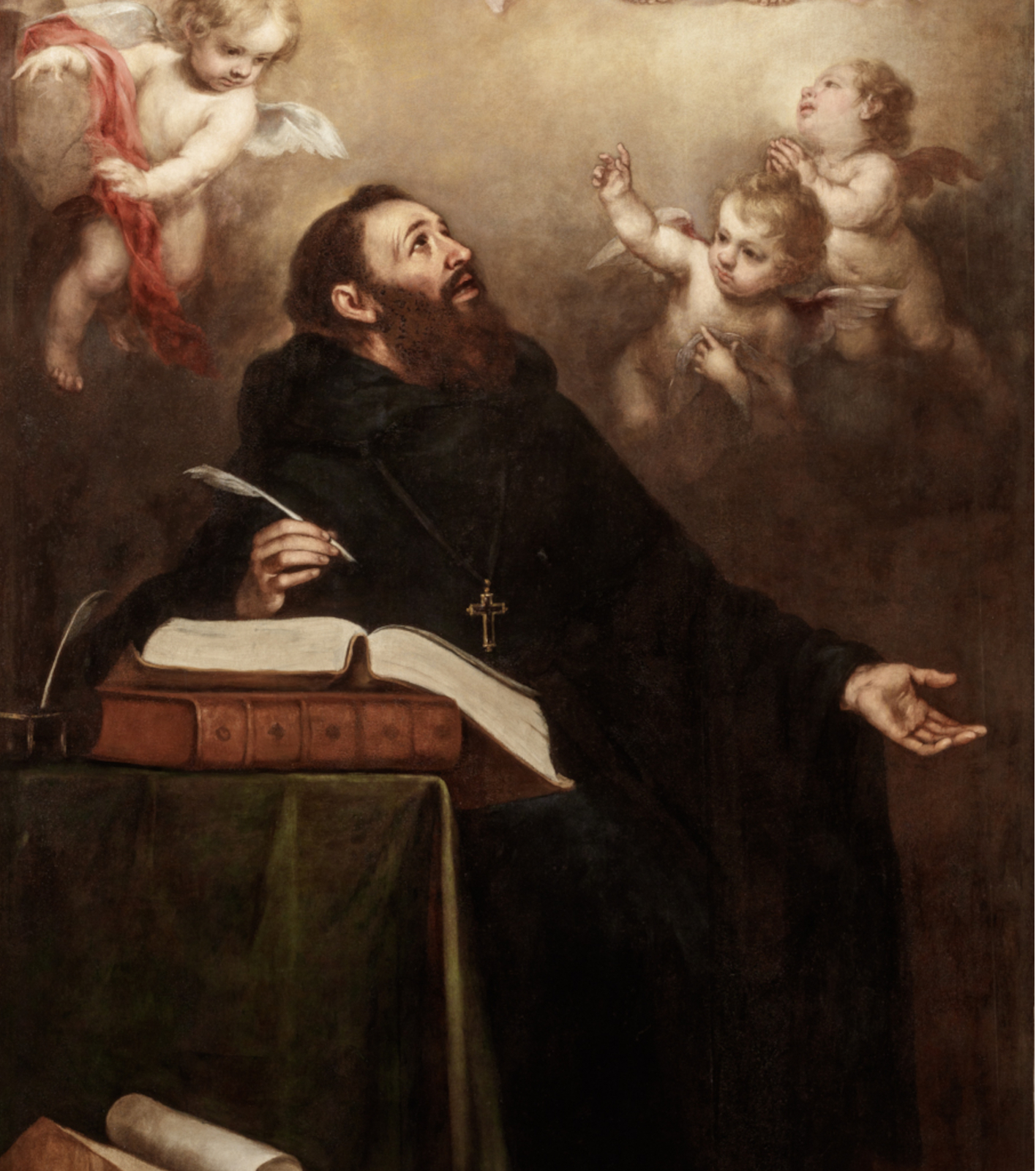
Writings
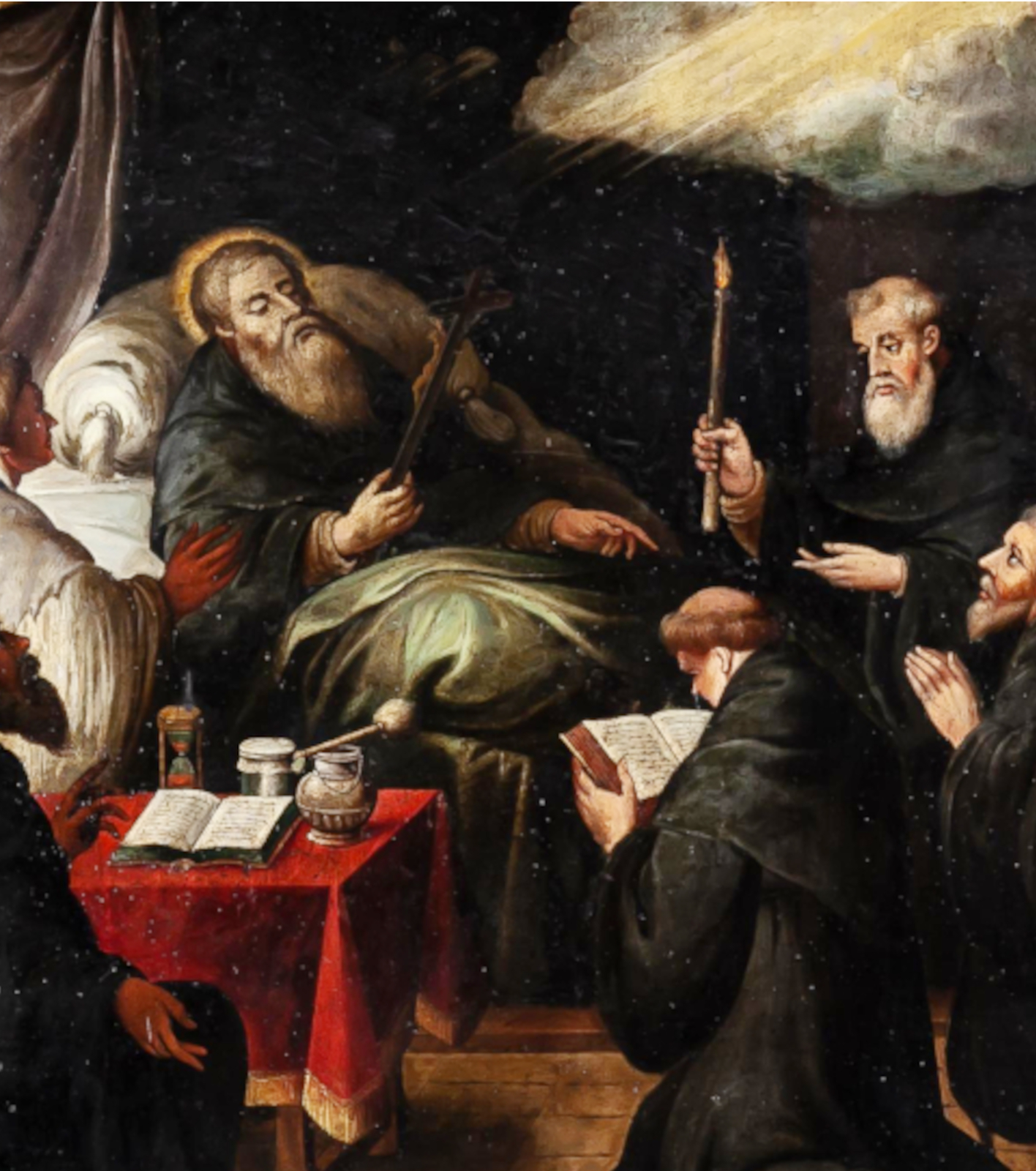
Death
A Restless Heart
“You stir up man that he may delight in praising You, for You have made us for Yourself, O Lord, and our hearts are restless until they rest in You.” (Confessions, Bk. I, Ch. I, 1).

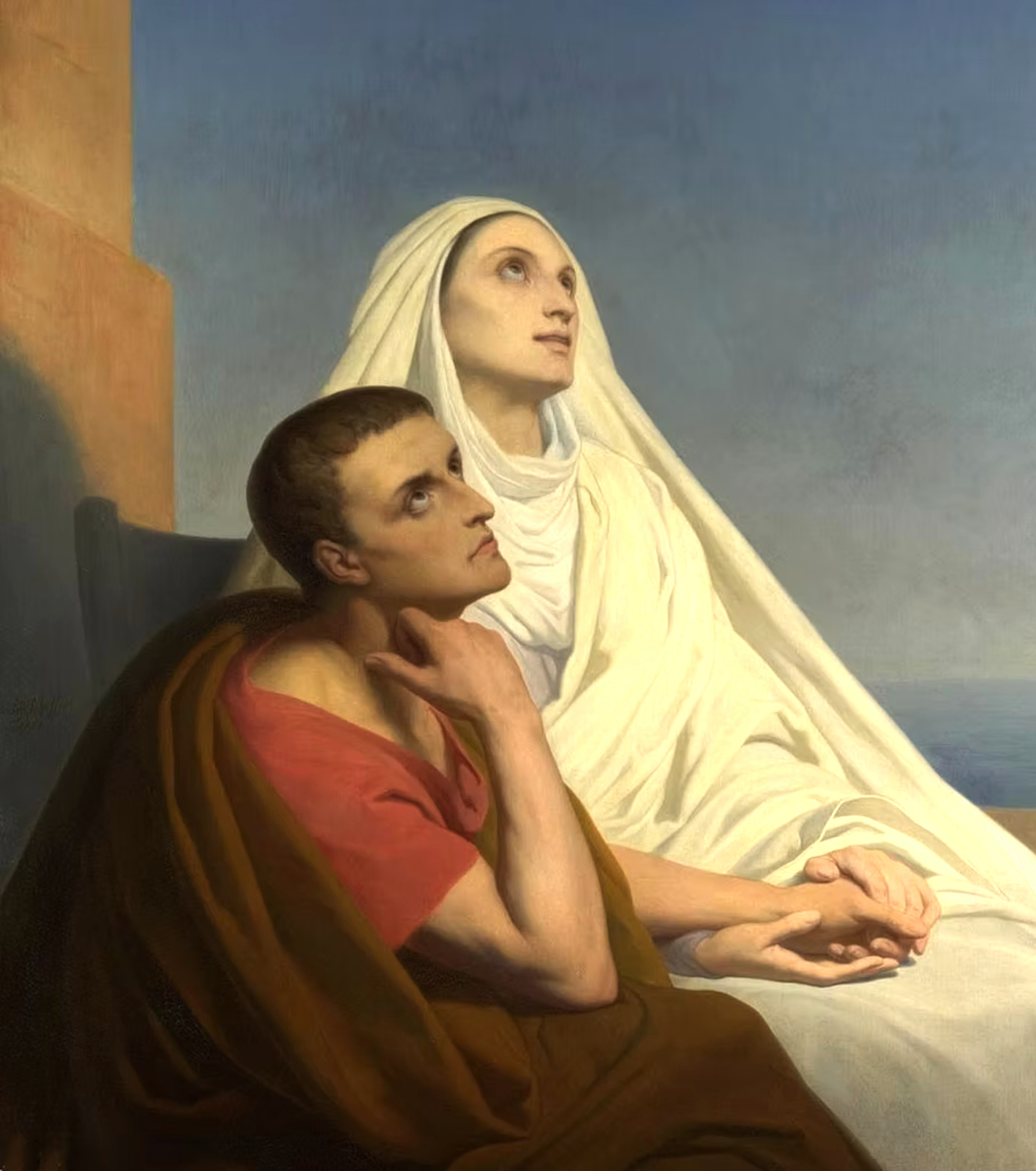
Born on November 13, 354, at Tagaste in Northern Africa, St. Augustine received the Christian faith from his devout mother, St. Monica, although he was not baptized. His pagan father, Patricius, saw to it that his brilliant son received a classical Latin education, and he later went to Carthage to pursue studies in rhetoric. Already as a young man, St. Augustine soon cast aside his faith, entering a relationship in which he fathered a son, Adeodatus, and eagerly seeking after riches and honors. Reading Cicero’s Hortensius enkindled in St. Augustine a desirefor wisdom and spiritual things, but when he tried to read the Bible, he was put off by its simplicity of style —— far inferior, he judged, to that of Cicero —— and failed to penetrate its depths. Instead, he turned to the Manicheans, meanwhile teaching rhetoric in Tagaste, in Carthage, and then briefly in Rome. St. Monica prayed and wept much during these years, beseeching God for her son's conversion. The holy bishop St. Ambrose comforted Monica, assuring her, “it is impossible that the son of such tears should perish” (Confessions, Bk. 3, Ch. 12, 21). Already victorious in the conversion of her husband, Patricius, in about 370, St. Monica’s prayers and tears would be answered far beyond her hopes in her son Augustine.
“Tolle et Lege”
“Too late have I loved You, O Beauty so ancient and so new, too late have I loved You! ...You have called to me, and have cried out, and have shattered my deafness” (Confessions, Bk. 10, Ch. 27, 38).
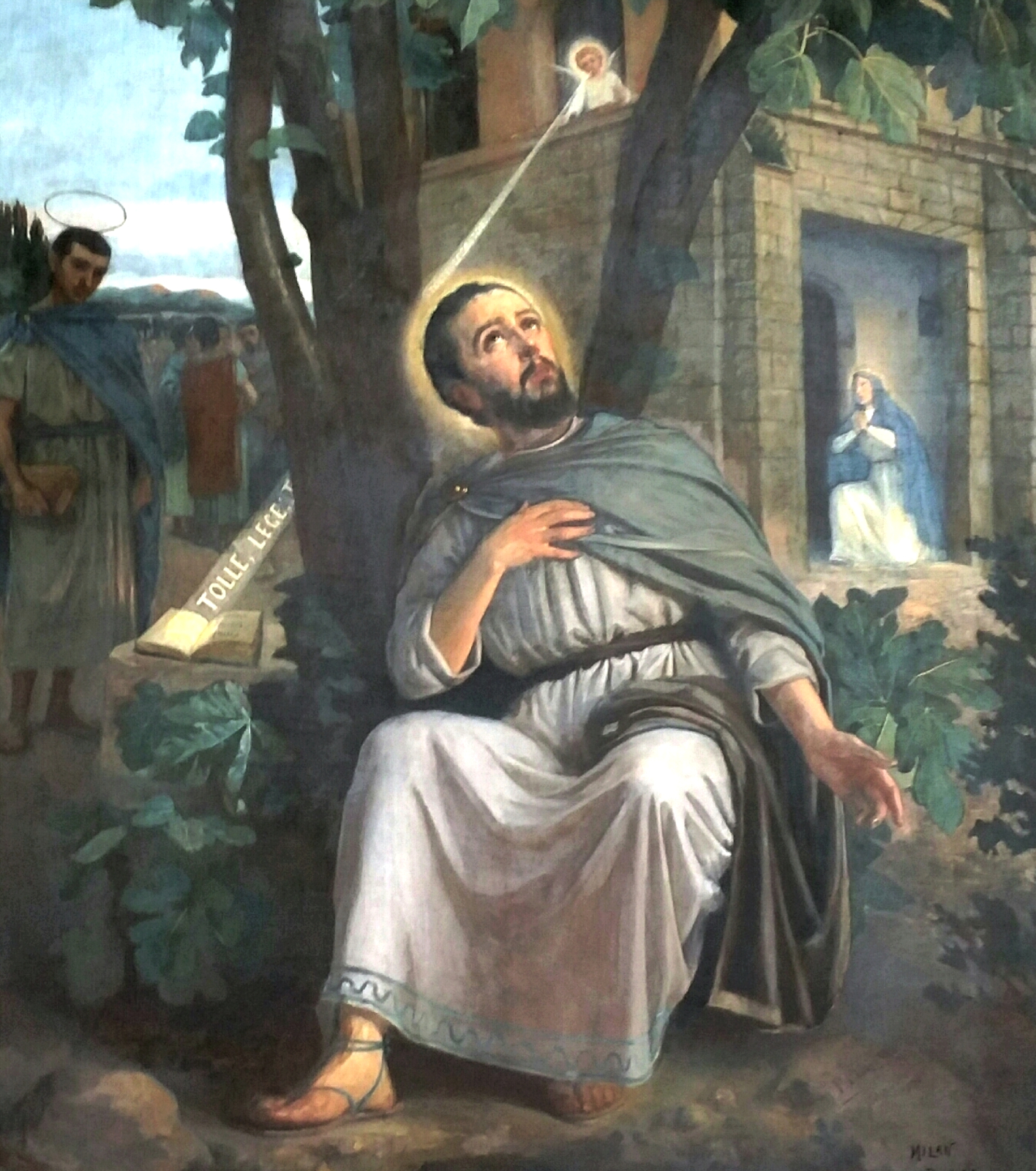
Becoming disillusioned with the Manicheans' teachings, St. Augustine eventually came to Milan to teach. Although he enjoyed listening to the eloquent sermons of the Bishop St. Ambrose, he still saw the Christian life, particularly chastity, as unlivable. It was only through reading the life of St. Antony, the Father of Monasticism, and the example of other monks that God’s grace finally penetrated Augustine’s heart. Amazed, he exclaimed, “The unlearned rise up and take heaven by storm, and we, with all our erudition but empty of heart, see how we wallow in flesh and blood!” (Confessions, Bk. 8, Ch. 8, 19). Rushing out to the garden to weep, he heard the words, “Take and read.” Taking up the epistles of St. Paul and reading the first verses he saw, Romans 13:13-14, Augustine found an exhortation to “put on the Lord Jesus Christ, and make no provision for the desires of the flesh.” Grace at once pierced his heart and converted him. Resigning his teaching position, Augustine retreated to Cassiciacum to prepare for Baptism, and at age 33 was washed in the saving waters by St. Ambrose on April 24, 387.
One Heart and One Soul Seeking God
“You bless those who live as one, and those who live in harmony bless you” (Antiphon from the Office of our Holy Father St. Augustine; cf. Enarrationes in Ps. 132, 13)
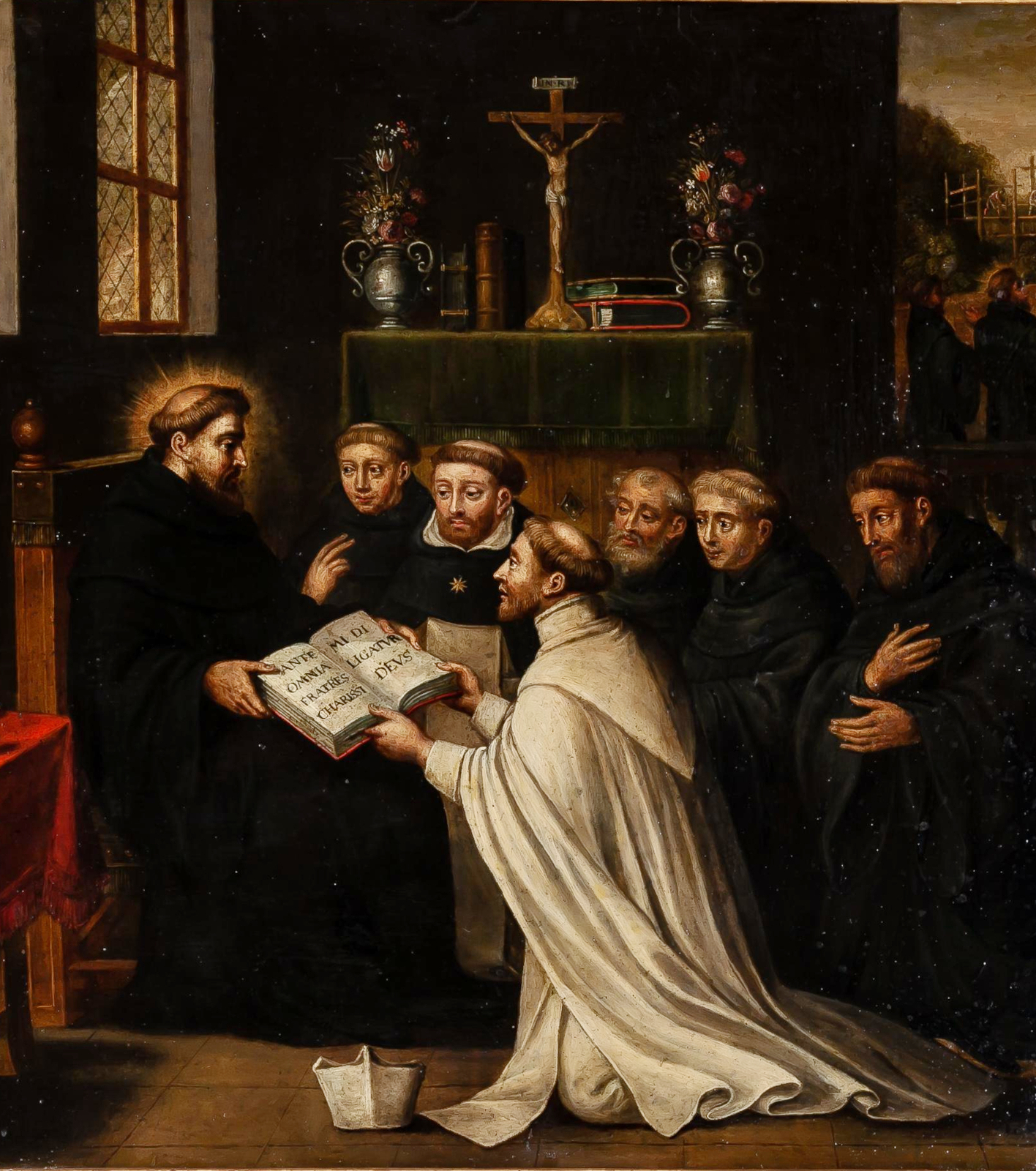
A lover of truth and of friendship, even before his conversion St. Augustine was already inspired by the ideal of living a life in community with his friends, holding all in common and pursuing wisdom. His conversion to Christianity and his embrace of the monastic life would thus be one and the same. After his Baptism and St. Monica's death later that year, he first spent time in Rome visiting monasteries and then returned to Tagaste, where he began to live with his friends in a monastic community. St. Augustine founded his monastic ideal on the example of the Jerusalem Church as described in the Acts of the Apostles, “one heart and one soul seeking God,” (cf. Acts 4:32), and he especially emphasized charity, the common life, poverty, prayer, asceticism, and manual labor. His Rule is oldest the in the West, and is still followed today not only by Norbertines and other Canons Regular, but also by Augustinians, Dominicans, and many others.
Bishop of Hippo
“We live here with you, and we live for you, and it is our intention and our vow to live with you without end in Christ’s presence...We live in the house called the Bishop’s House in such a way as to imitate to the best of our ability the saints of whom the Acts of the Apostles says, ‘No one called anything his own, but they held everything in common” (Sermo 355).
As he would later recount, St. Augustine went to Hippo “to see a friend whom I thought I could win for God, and who would live with us in the monastery.” There he was seized upon by the people of Hippo to be ordained a priest. But he did not leave behind the monastic life. Bishop Valerius gave Augustine a garden in which to establish a monastery, and there, he continues, “I began to assemble brothers to be my companions in this holy undertaking, men possessing nothing, just as I possessed nothing, and imitating me. Just as I sold my tiny bit of property and gave the proceeds to the poor (cf. Acts 4:34), so they too...did the same, that we might live from our shared resources; but what we shared would be a great and very rich estate: God Himself” (Sermo 355). Upon succeeding Valerius as bishop of Hippo, St. Augustine established a monastery of clerics in his “Bishop’s House,” where he combined a monastic life with pastoral zeal.
Preacher of Truth
“And so many things were dictated and published by him and so many things were discussed in the church, written down and amended, whether against various heretics or expounded from the canonical books for the edification of the holy sons of the Church, that scarcely any student would be able to read and know them all” (Vita Augustini, XVIII).
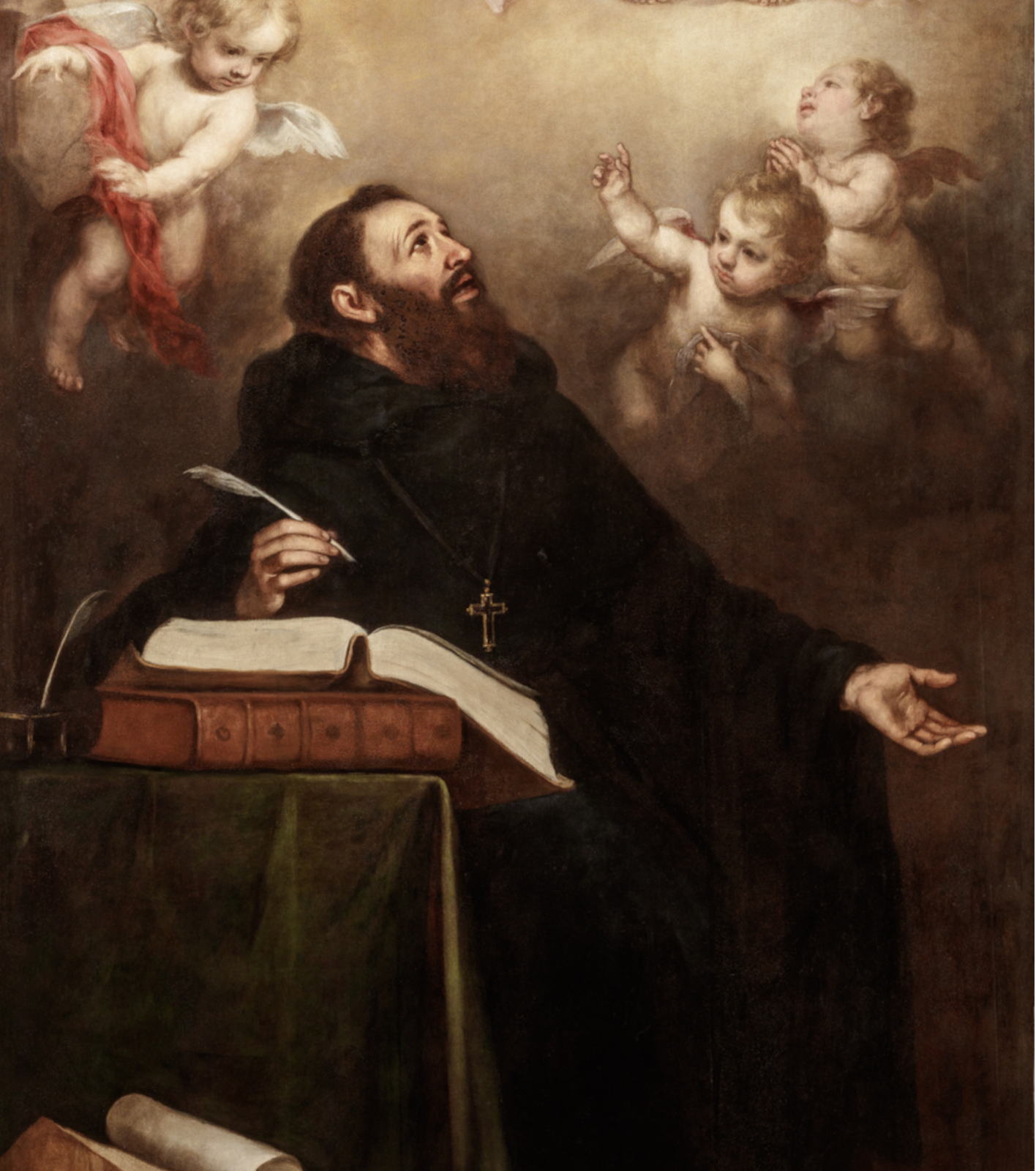
A prodigious writer and preacher, St. Augustine vigorously combated the errors of his day, especially the Manichean, Donatist, and Pelagian heresies, as well as the pagans, seeking to draw all into the unity of the truth. His theological, philosophical, and moral treatises, commentaries on Sacred Scripture, sermons, and letters fill volumes, while his Confessions remains one of the most moving autobiographical acounts of all time. Where did he receive the strength for all of these labors? To his last day, he lived in community with his clerics as a precursor of canonical life, bearing one another's burdens and together singing God's praises.
To the Very End
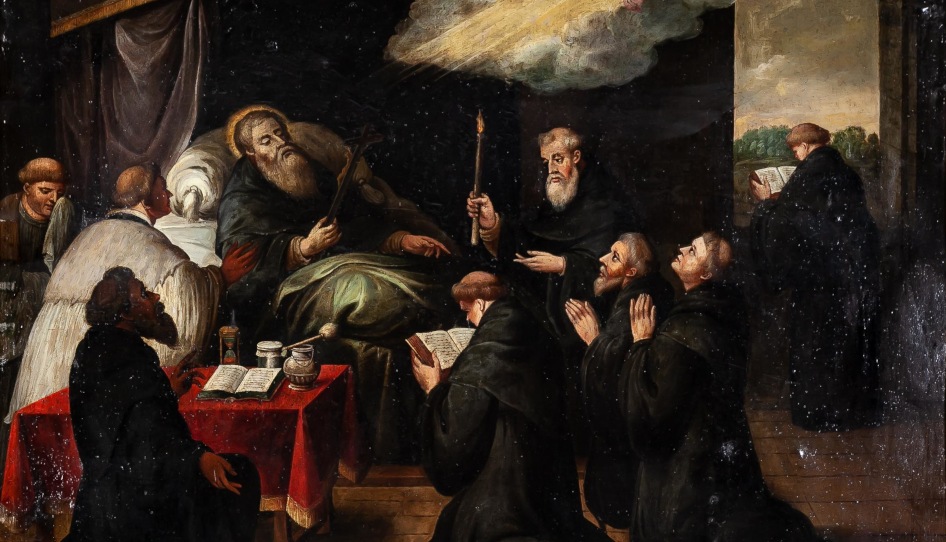
“Up to the very moment of his last illness he preached the Word of God in the holy Church incessantly, vigorously and powerfully, with a clear mind and sound judgment. With all the members of his body intact, with sight and hearing unimpaired, in the presence of his brothers who stood by and prayed, he slept with his fathers” (Vita Augustini, Ch XXXI).
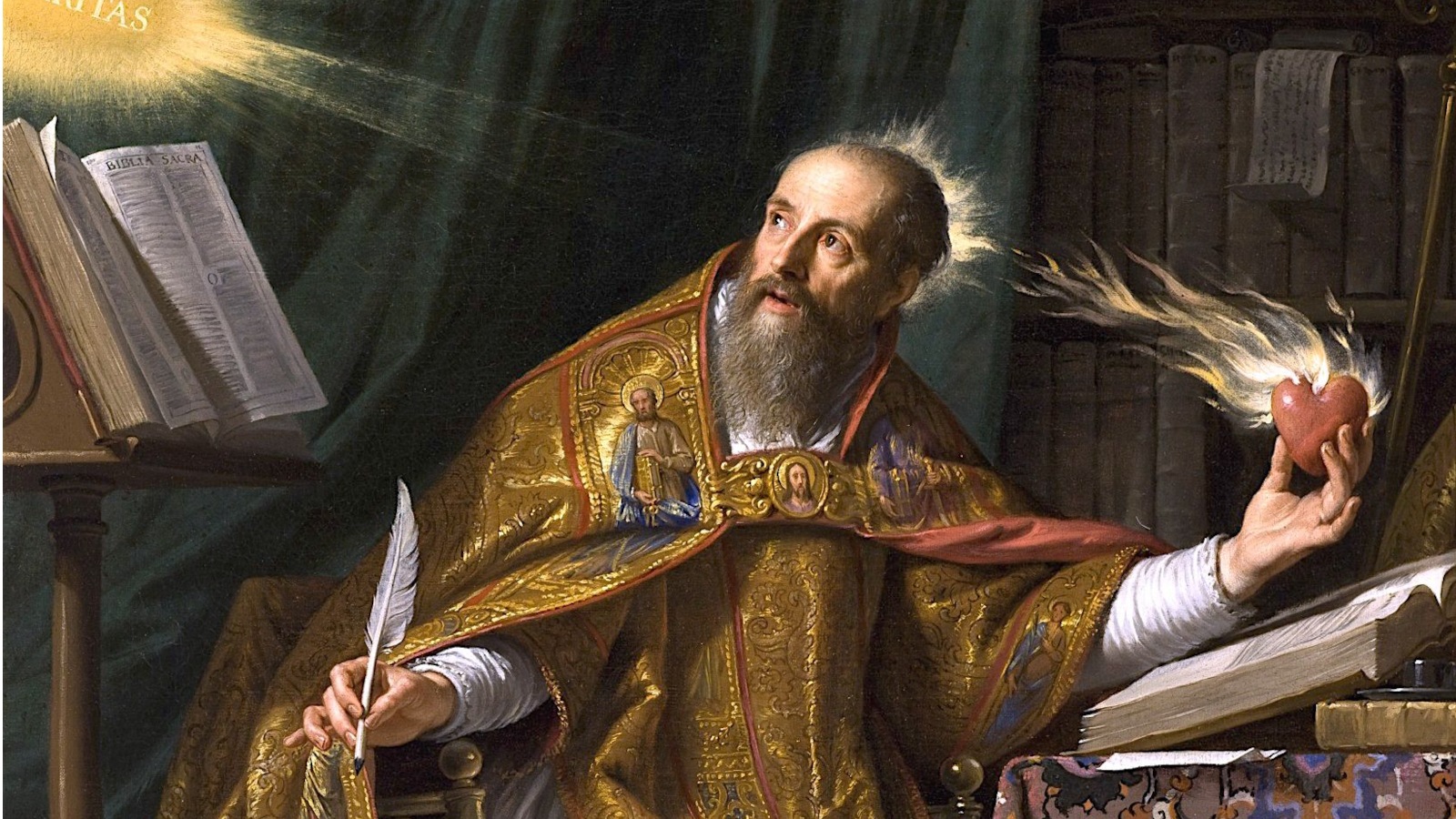
St. Augustine died at the age of 76 on August 28, 430, with the penitential psalms on his lips, while the Vandals were besieging his city of Hippo. His relics were first translated to Sardinia at end of the seventh century, and then to Pavia in 725, where they rest today in the Basilica of San Pietro in Cielo d’Oro. Known as the “Doctor of Grace” for his defense of the Catholic doctrine of grace against the Pelagian heresy, St. Augustine is usually depicted with a flaming heart, often pierced by an arrow, symbolizing his ardent love of God and neighbor.
The Rule of Saint Augustine
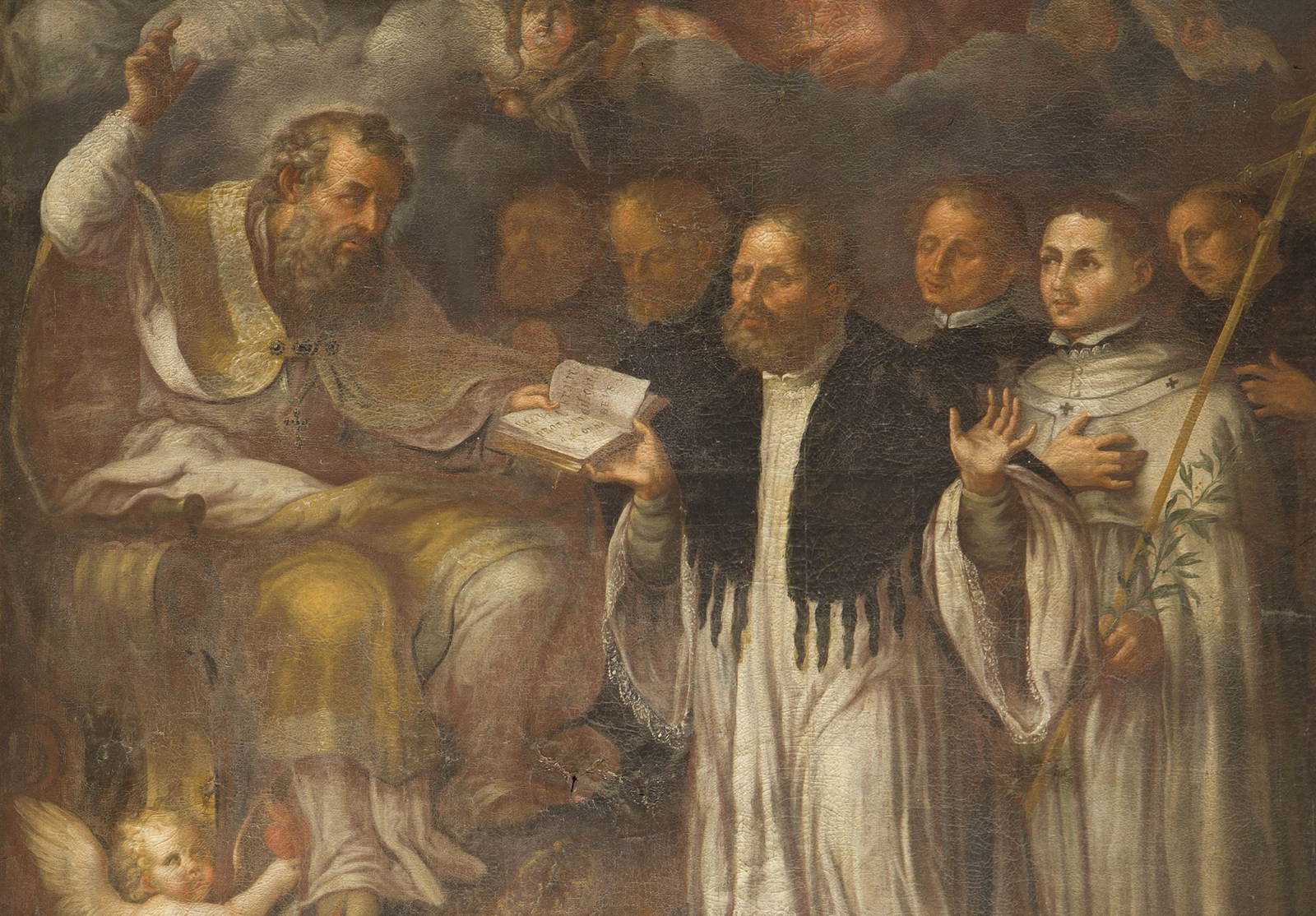
St. Augustine’s Rule, which governs our Norbertine canonical life and is also followed by Augustinians, Dominicans, and many others, is the oldest religious Rule in the Western Church. A masterpiece of brevity and charity, it lays out simply and succinctly the principles by which monastic life is to be governed. His Rule is characterized by its emphasis on charity and the community, its family spirit and discretion. All things are to be held in common, a point on which St. Augustine strongly insisted, and each Sister is to give herself wholeheartedly to the service of the community. The superior, while not neglecting discipline, is first and foremost a mother, and is to provide for each Sister according to her individual needs. St. Augustine draws his Rule to a conclusion with a prayer that God will grant to each the grace to observe the precepts with love, “as lovers of spiritual beauty, exuding the fragrance of Christ by the goodness of your lives.”
CC-BY KIK-IRPA, Brussels, Photo no. X070422
Excerpts from the Holy Rule
“Let us love God above all things, dearest sisters, then our neighbor, for these are the chief commandments given to us. ... The chief motivation for your sharing life together is to live harmoniously in the house, and to have one heart and one soul seeking God. ... Do not call anything your own; possess everything in common. ... Live then, all of you, in harmony and concord; honor God mutually in each other; you have become His temples. Be assiduous in prayer and the scheduled hours and times. ... When you pray to God in psalms and hymns, the words you speak should be alive in your hearts. ... The Lord grant you the grace to observe these precepts with love as lovers of spiritual beauty, exuding the fragrance of Christ in the goodness of your lives; you are no longer slaves under the law, but a people living in freedom under grace.”
"Renew in Your Church, we pray, O Lord, the spirit with which You imbued Saint Augustine, so that filled with the same spirit, we might thirst for You, the only source of wisdom, and seek You, the author of divine love. We ask this through our Lord Jesus Christ, Your Son, Who lives and reigns with You in the unity of the Holy Spirit, one God forever and ever. Amen."
-- Prayer in honor of St. Augustine