

Stages of Formation
“We should never forget that consecrated life, before being a commitment of men and women, is a gift which comes from on high, an initiative of the Father ‘Who draws His creatures to Himself with a special love and for a special mission’ (Vita consecrata, 17). This look of special love profoundly touches the heart of the one called, who is urged by the Holy Spirit to place himself or herself in the footsteps of Christ, in a particular way of following Him, by means of assuming the evangelical counsels of chastity, poverty, and obedience. A stupendous gift!”— Message of Pope St. John Paul II for the First World Day of Consecrated Life, 1997
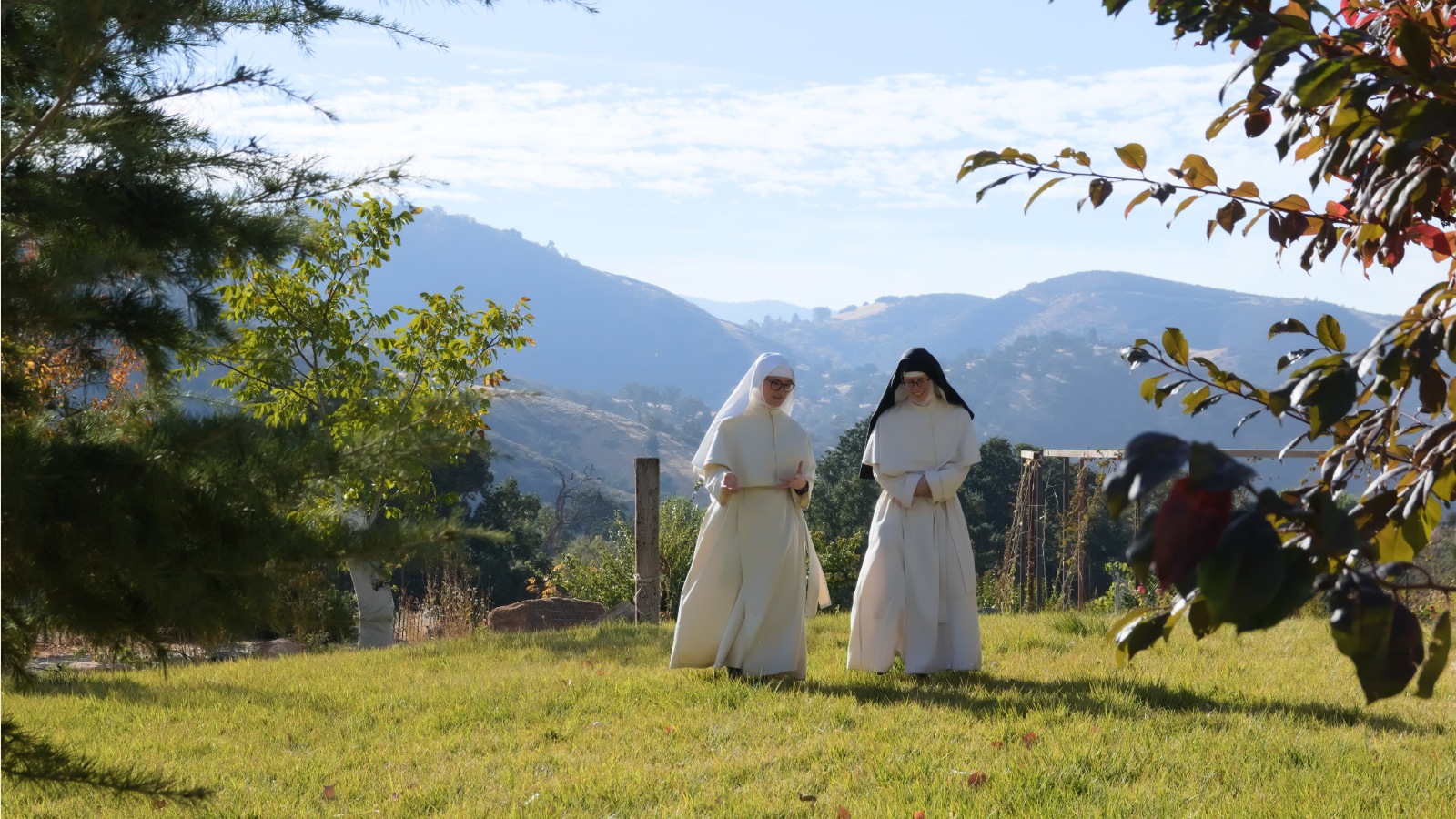 Accompanying her initial discernment of a call to follow Christ more closely in the religious life according to our Norbertine tradition and charism, the formation process seeks to enable the candidate first to come to know, and then to begin to assimilate and deepen our particular vocation within the Church. During this time, both she and the community continue to mutually discern whether God is indeed calling her to our community. The various stages of initial formation gradually integrate her into the community and into the Order, and enable her to assume responsibilities proportionate to her current stage. Every step of the way, she is entrusted to the care of a formator, whose role is to guide and accompany her on her path of discernment.
Formation continues after solemn profession, now with the goal of helping the canoness continue to respond to her divine vocation ever more faithfully throughout the rest of her life. For, far more than simply a matter of studying various topics or acquiring certain concepts, important as these are, formation is fundamentally a process of growth and conversion that involves the whole person and continues over the course of a lifetime. It is a lifelong process of coming to know Christ ever more deeply and becoming more and more configured to Him through the profession of the evangelical counsels as lived out in our Norbertine way of life, so that with Him our life becomes a continual glorification of the Father.
Aspirancy
“The aspirancy, considered as a first knowledge of the monastery by the candidate and of the candidate by the monastery community, involves a series of contacts and times of community experience.”(Cor orans, n. 262)
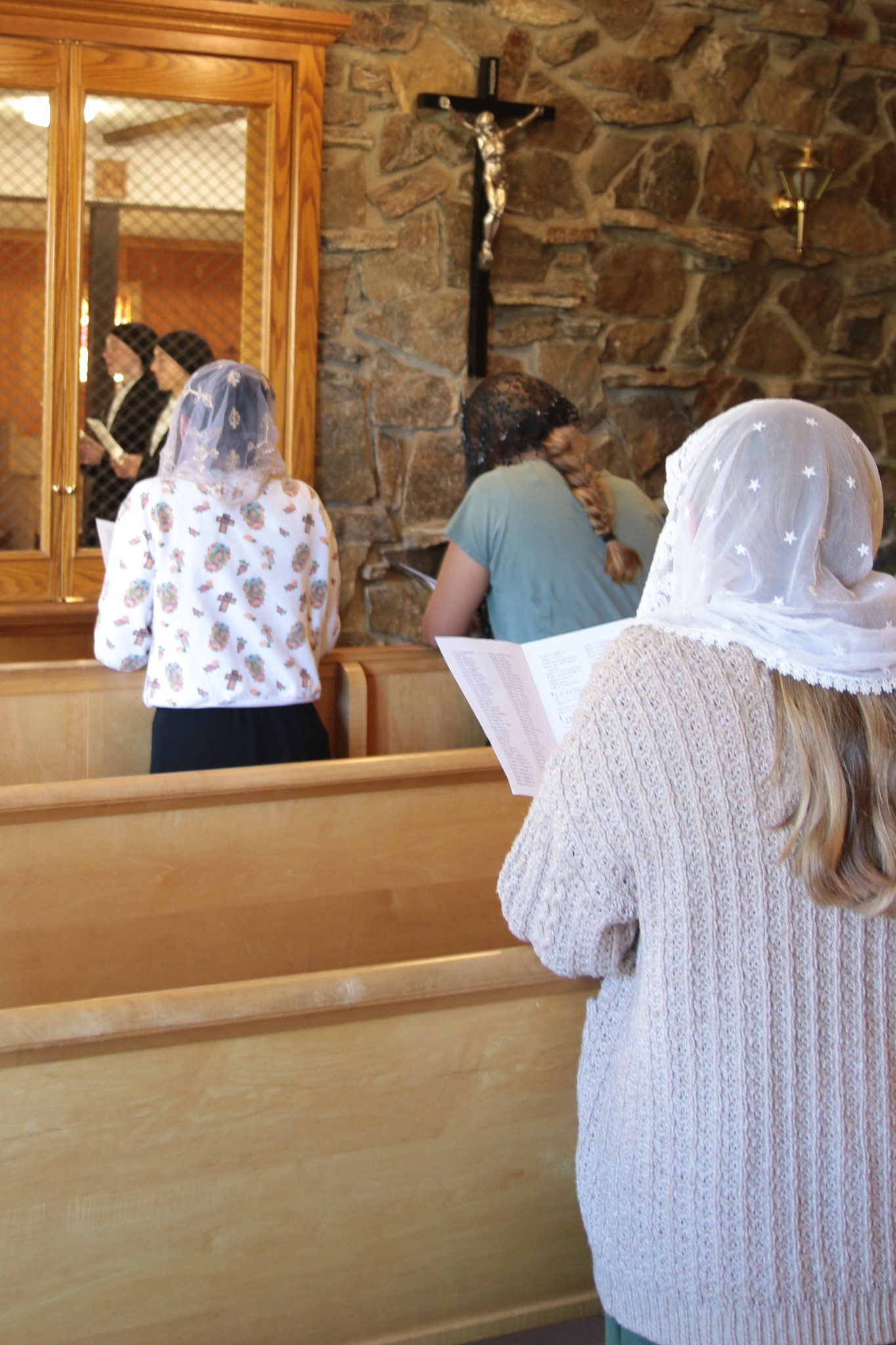
Aspirancy is a time of initial discernment during which a young woman becomes acquainted with Norbertine life and spirituality as lived at the Bethlehem Priory of St. Joseph. During this period of at least one year, the aspirant discerns, together with Mother Prioress and other sisters involved in formation, whether God may be calling her to become a member of our community. The period of aspirancy also serves to help ascertain whether she possesses the initial qualities which would enable her to live our cloistered contemplative life in a fruitful and joyful way. The aspirant comes for visits, stays at our Bethany Guest House, and experiences the life by following the community Horarium as much as possible from outside the cloister, coming into the cloistered area to join the sisters for outdoor work (gardening, animals, etc.). Applicants to our priory must be at least 18 years old, confirmed, and practicing their Catholic Faith.

Postulancy
“The goal of this preliminary time of formation is not only to form a judgment on the vocation of the candidate and her aptitude for our manner of life, but also to develop an understanding of her religious sense and to progressively transition her from secular life to religious life.”(Constitutions of the Canonesses Regular of Prémontré, n.150)
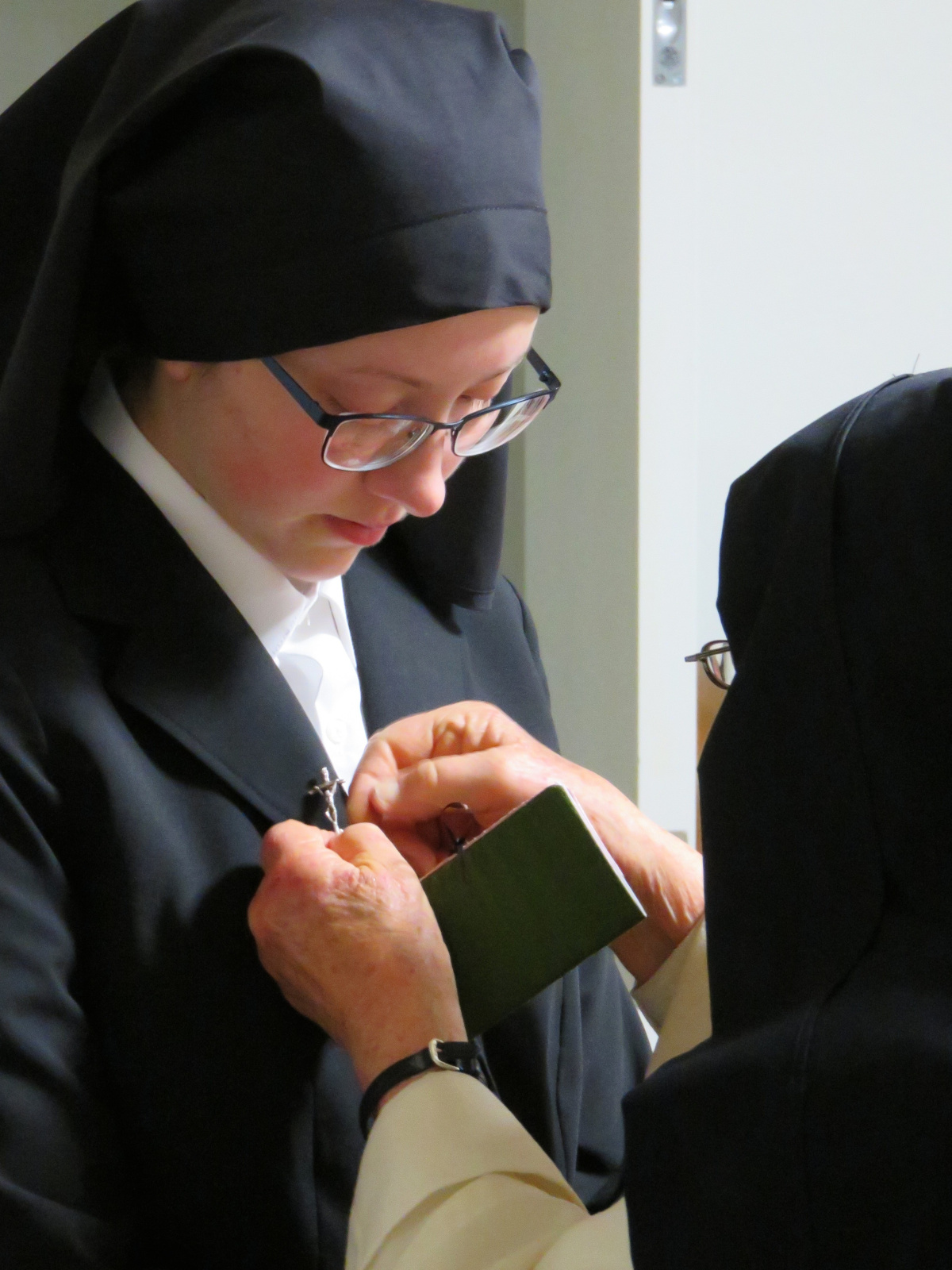
On the day of her entrance into the community, the postulant receives the Rule of St. Augustine, a black postulant veil, and a Crucifix lapel pin. She will wear this pin throughout her postulancy, as a reminder that our life is a following in the footsteps of Christ Crucified. The time of postulancy is spent living and working under the direction of the Novice Mistress, and provides a direct and concrete experience of our Norbertine contemplative life as well as a gradual introduction to its fundamental elements. During this period, which lasts for at least one year but may be extended up to two years, the postulant and the community mutually discern her call to espousal to Christ in the Norbertine Order and as a member of our community.
Novitiate
“Life in our Order properly commences with the novitiate. The goal of the novitiate is to make known to the novice, first of all, the demands of religious life, and then to help her live, according to the Gospel of Christ, the life of communion in which, at the opportune time, she will be engaged by her profession of vows.”(Constitutions of the Canonesses Regular of Prémontré, n.155)
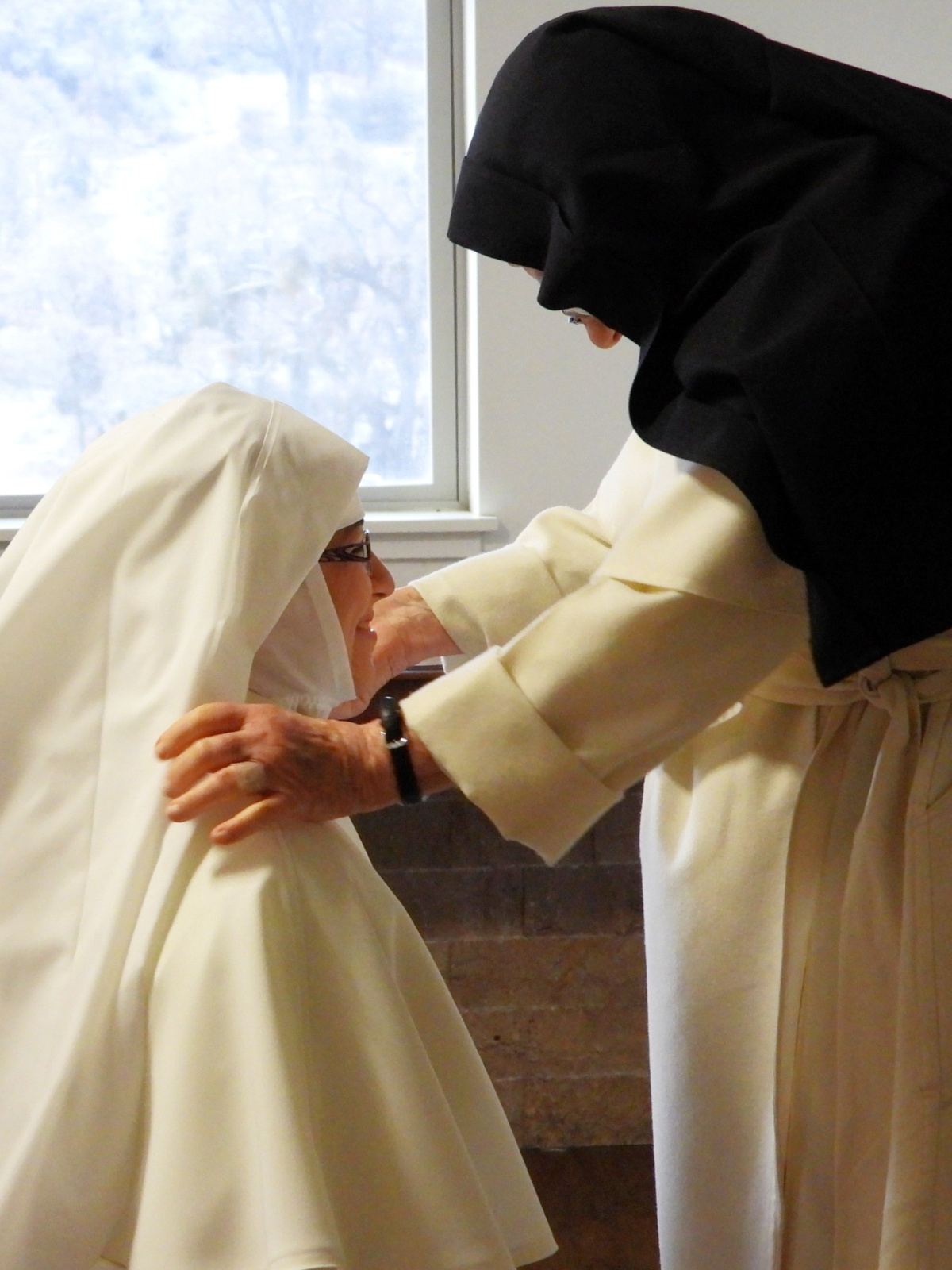
After completing her period of postulancy, a candidate is received more fully into the community and the Order as a novice. She is now clothed in the religious habit and is given her religious name during the vestition ceremony. She also receives the Norbertine Constitutions, which together with the Rule of St. Augustine guide and direct our pursuit of the perfection of charity. The period of novitiate, which lasts two years, is intended to deepen the novice's understanding of our Norbertine vocation and to form her in its spirit, as well as to verify her “real and concrete ability to live it with joy and generosity” (Cor orans, 278). Because the religious life is ordered toward the consecration of the whole person to God, the critical period of the novitiate addresses the formation of the spiritual, intellectual, and affective qualities of the novice.
First Profession
“Since the first profession of vows, in so far as it is temporary, has a probationary character, the sister must be clearly oriented toward perpetual profession, as this is a time of apprenticeship and preparation.”(Constitutions of the Canonesses Regular of Prémontré, n. 168)
After completing the two years of novitiate, a novice makes her first profession of vows, promising poverty, chastity, obedience, the conversion of her ways, and life in community for three years. She then receives the black veil of the professed, which symbolizes her death to the world. After these first three years under vows, the “junior-professed” then renews her simple vows annually for another three to six more years, during which time she gradually enters fully into the life and work of the professed members of the community. This period is intended to help her come to a greater maturity in her vocation and continue to be formed in and by the Norbertine spirit, such that it truly becomes her own and begins to animate her daily life in all its various concrete moments. The time in temporary vows may be compared to the period of engagement before marriage: Sister has formally said “yes” to Christ's call, and now seeks, relying on God’s grace, to deepen her understanding of and fidelity to the vows, so that she may offer herself forever to Christ in solemn profession with ultimate generosity and love.
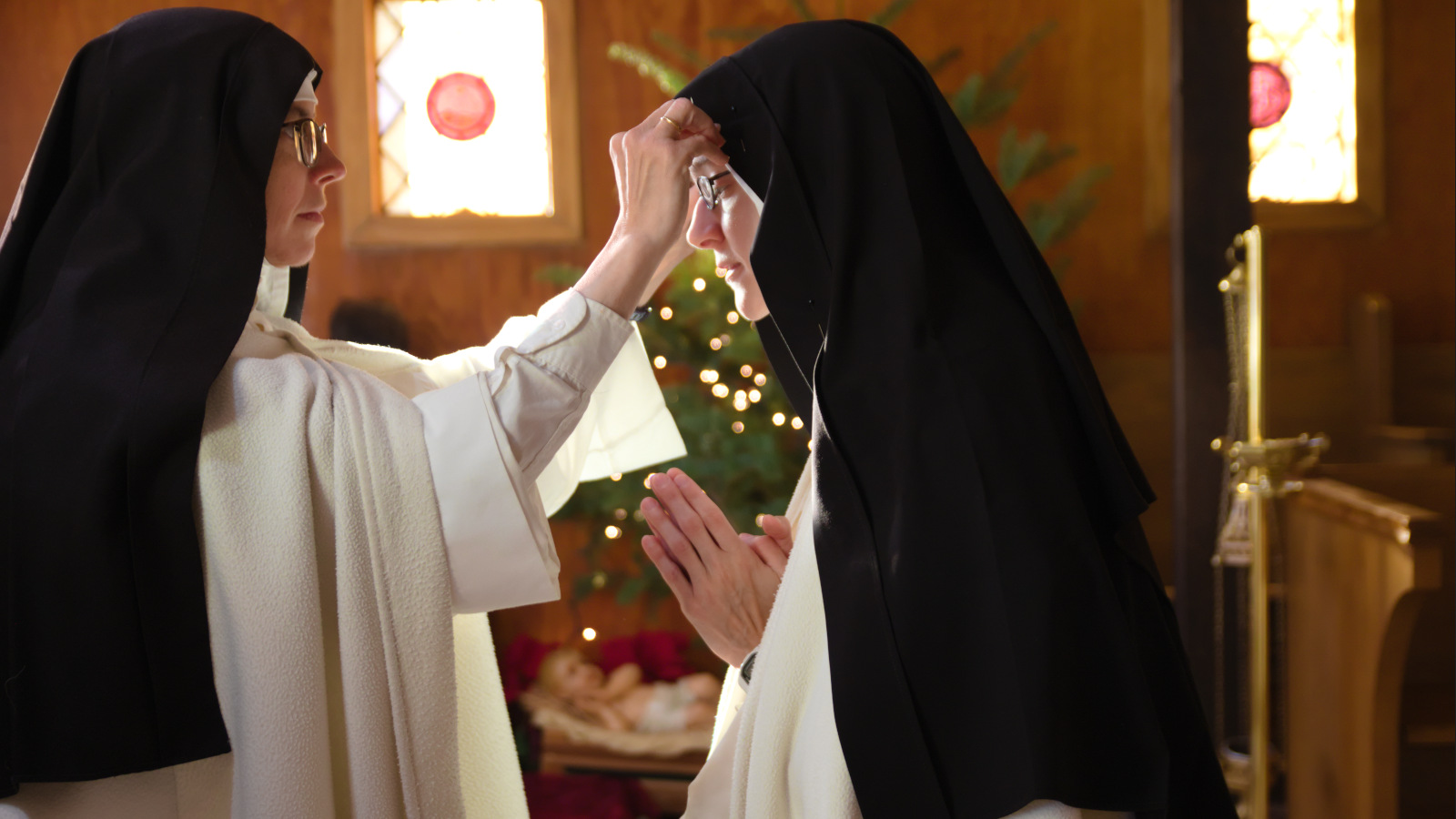
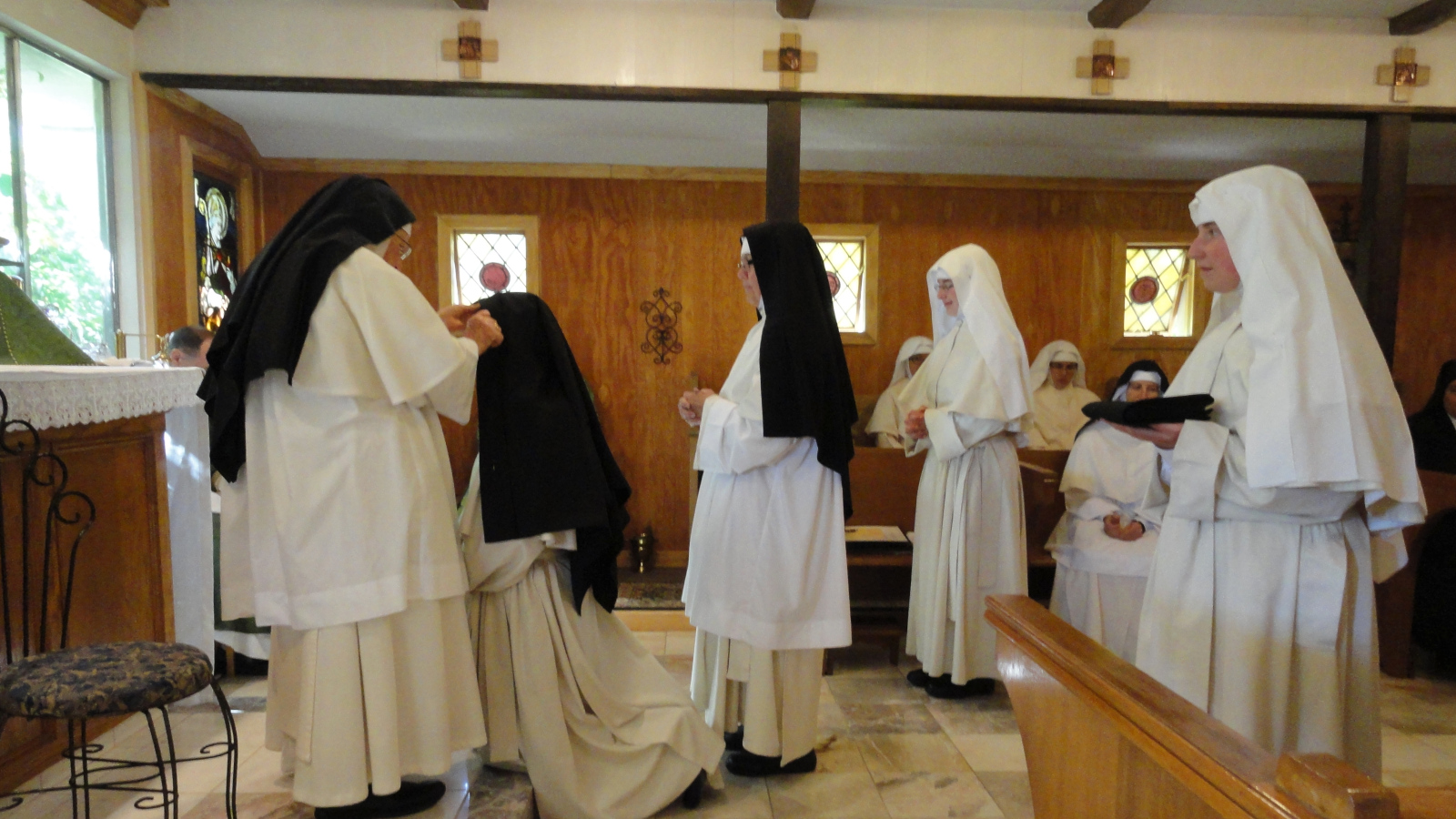
“I renounce the world, and I promise a conversion of my ways and life in community, especially in poverty, consecrated chastity and obedience, according to the Rule of St. Augustine and the Constitutions of the Canonesses Regular of the Order of Prémontré, to you, Mother Prioress, and to the Sisters for three years.”— Norbertine Vow Formula for Temporary Profession
Solemn Profession
"By our profession of vows, we give response to the mercy of God, who calls us, that, dead to sin and living for God (cf. Rom 6:11), in a fraternal communio characterized by the evangelical counsels, we may follow Christ and imitate Him more closely. The prime norm for our religious life is the following of Christ, as outlined in the Gospels.”(Constitutions of the Canonesses Regular of Prémontré, n. 51)
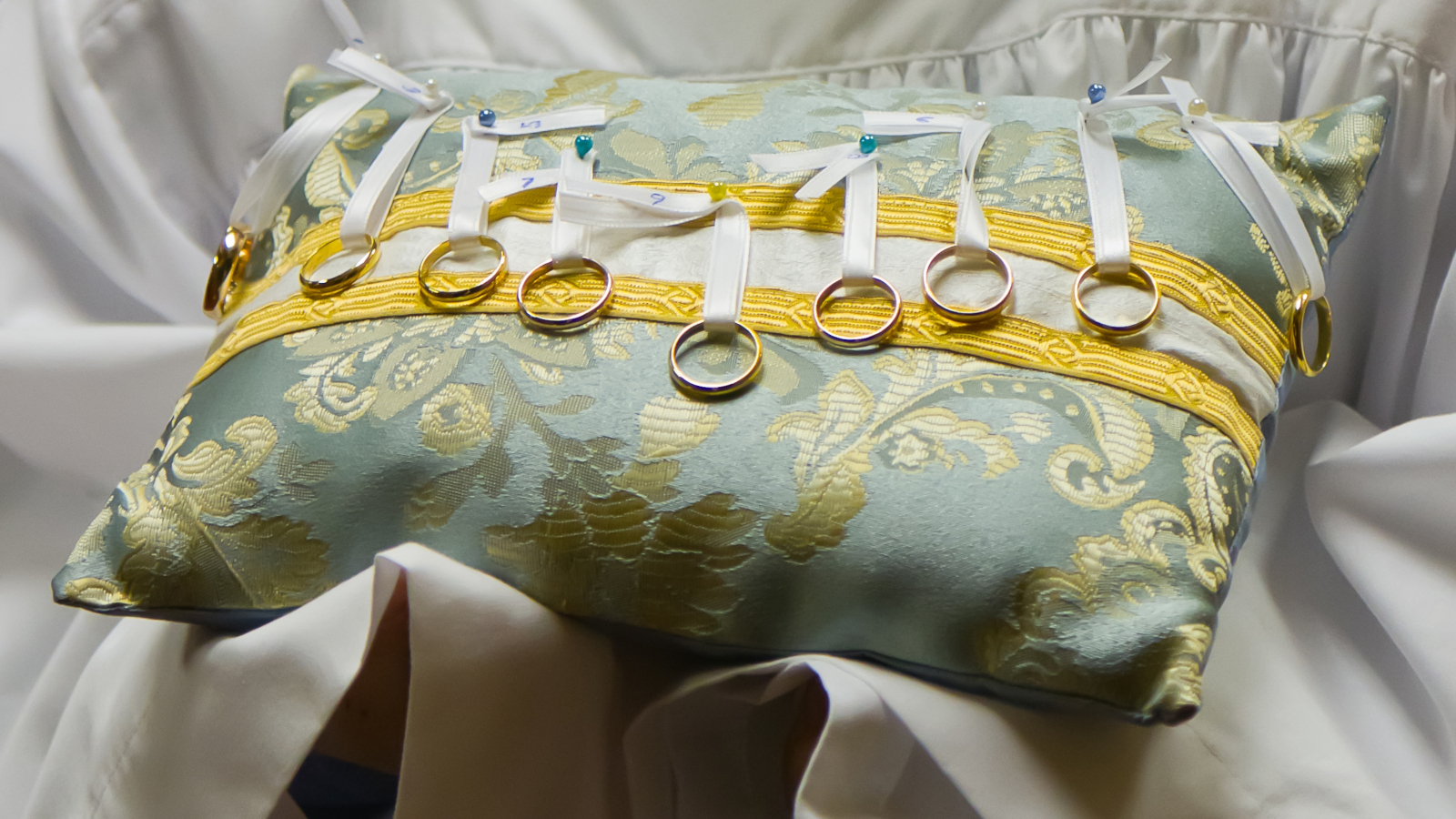
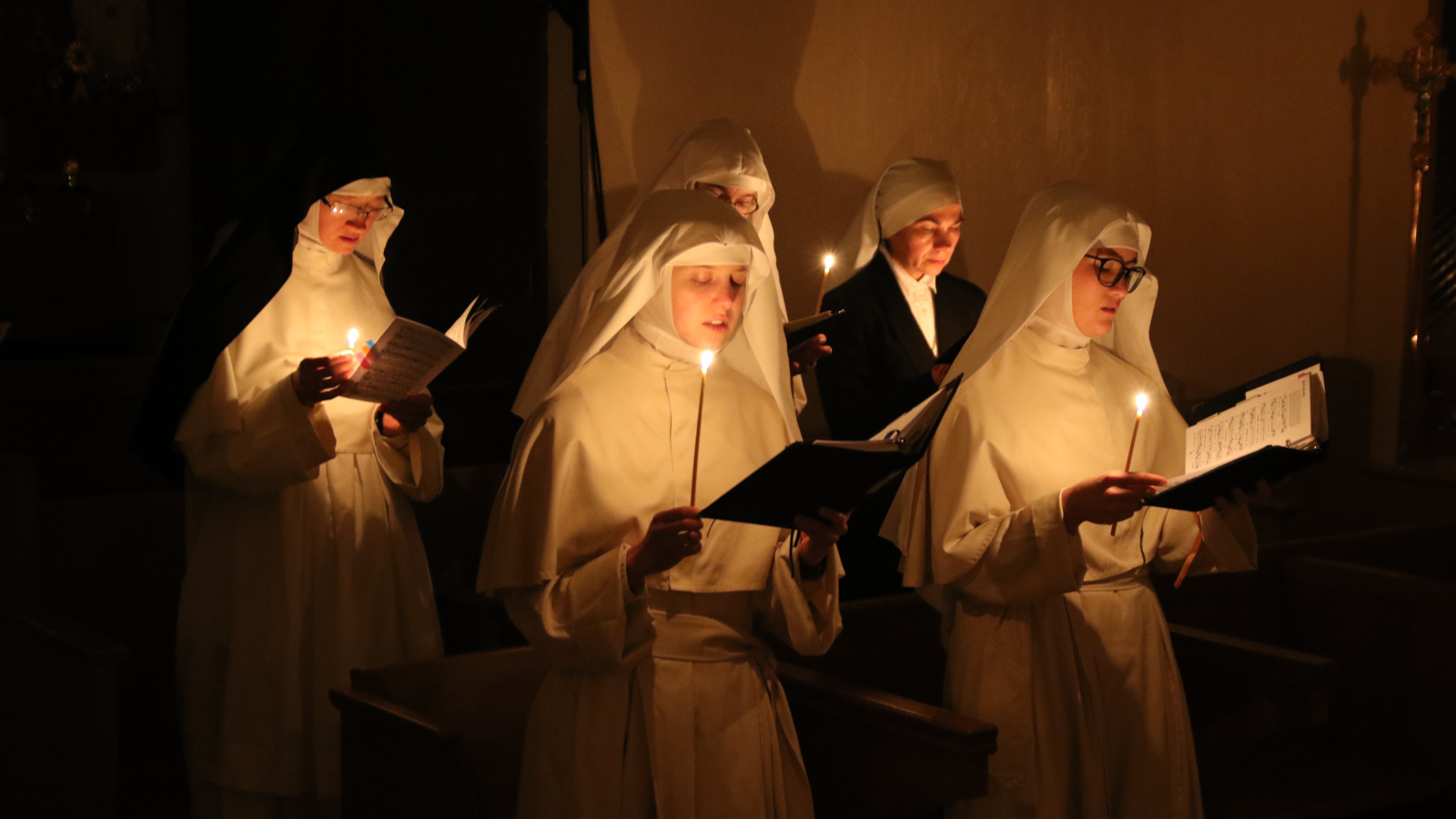
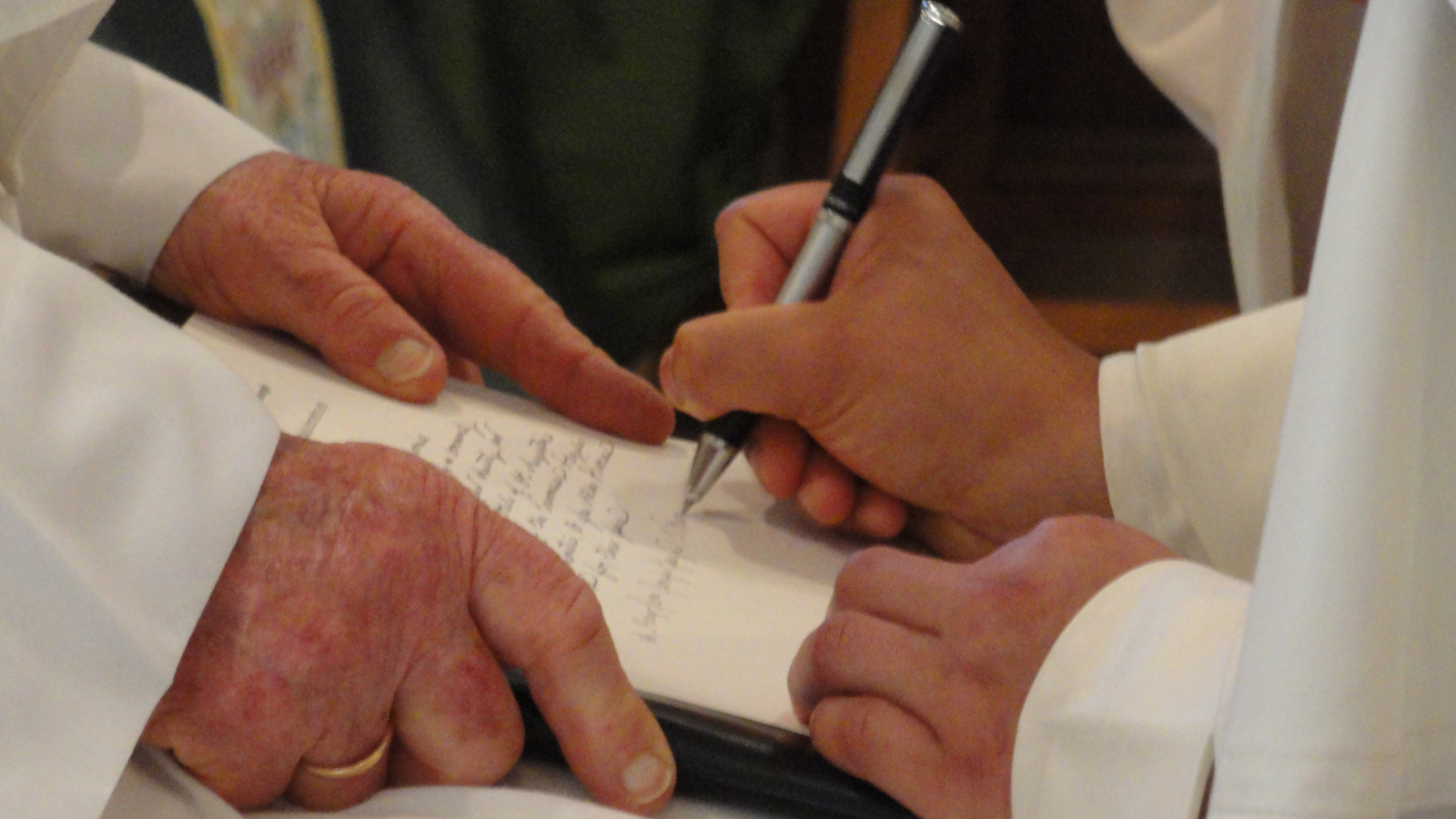
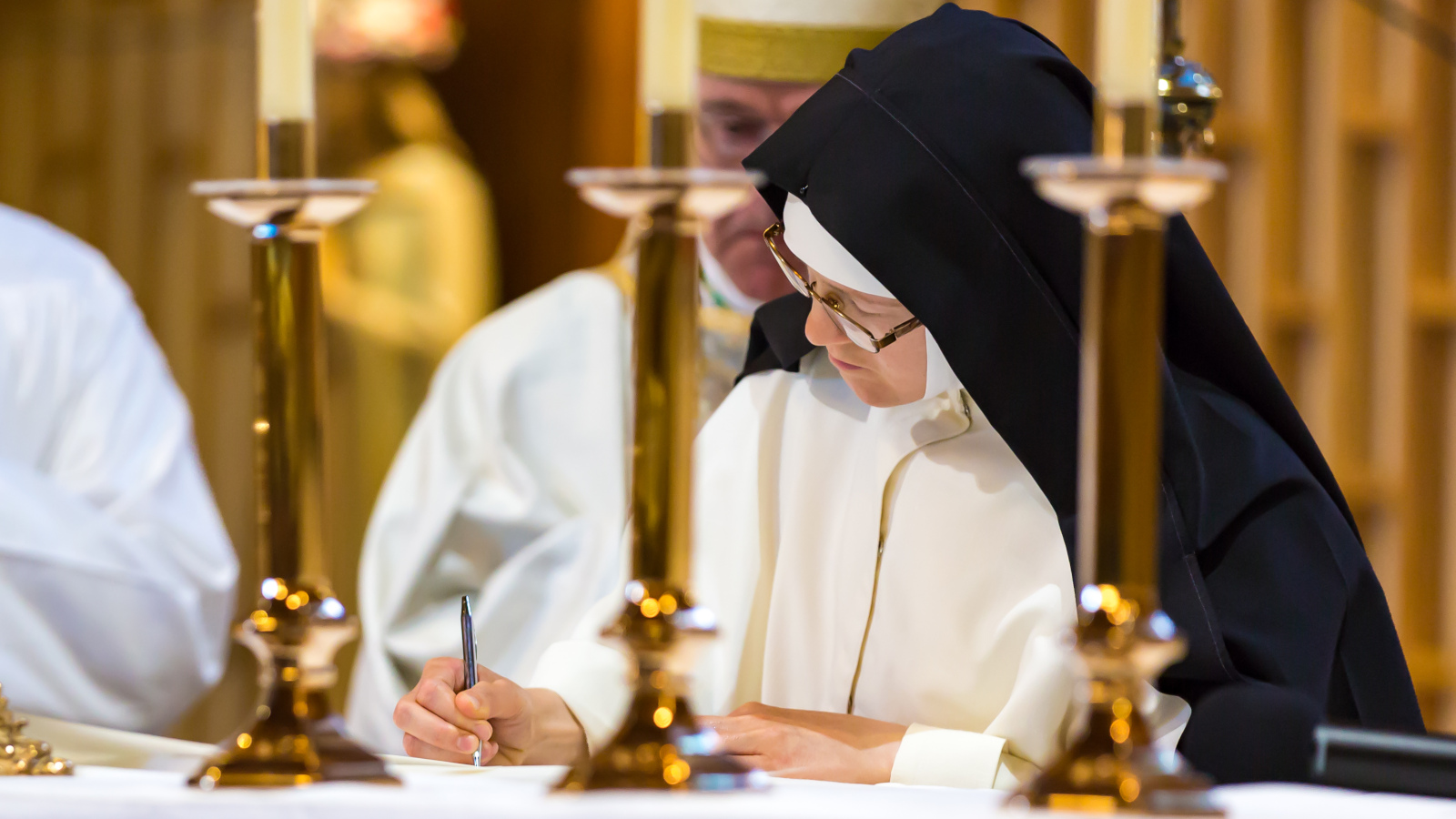
At her solemn profession, a Sister is espoused to Jesus Christ within an individual church of our Order, to which she vows stability. Following her profession of solemn vows of perpetual poverty, chastity, and obedience, she signs her vow formula on the altar, where it will remain throughout the remainder of the Holy Sacrifice of the Mass, signifying her participation in Christ’s perfect self-offering to the Father. As a Bride of Christ, she receives a wedding ring. She is now fully a canoness regular, dedicated to the solemn celebration of the Church's own prayer, the Sacred Liturgy, in union with Christ her Spouse. For this reason, she also receives the canonical rochet, a linen garment worn over her habit during more solemn liturgical celebrations.
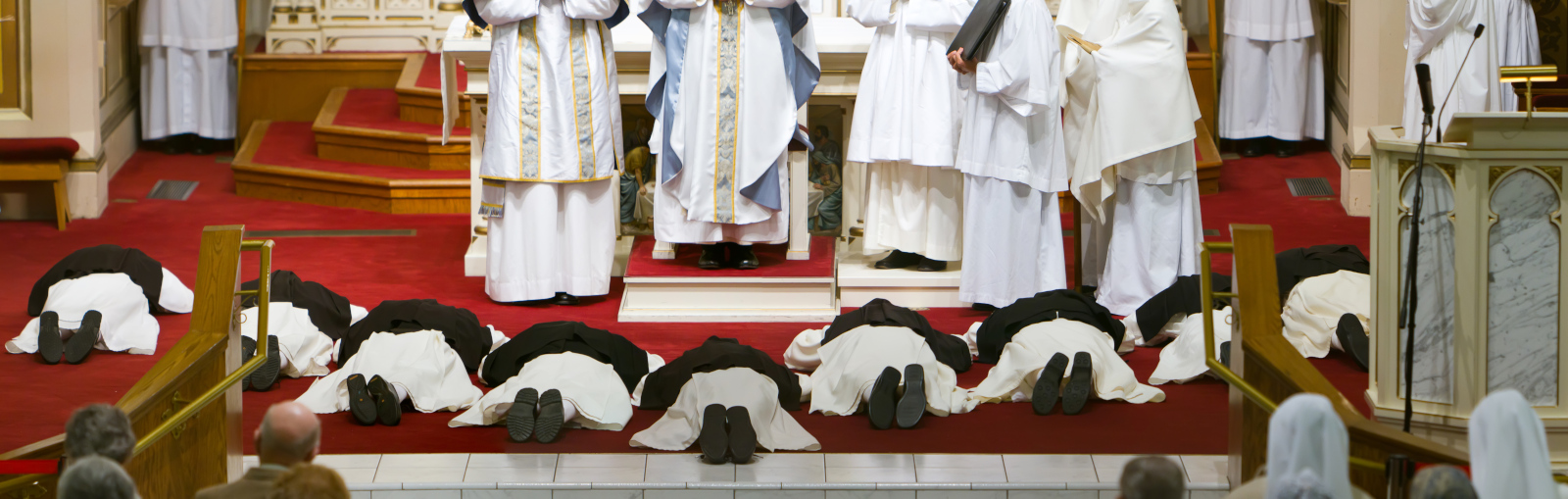
“I, Sister __, offer and dedicate myself to the Church of the Immaculate Virgin Mary and Saint Joseph of Tehachapi, and I promise a conversion of my ways and life in community, especially in poverty, consecrated chastity, and obedience, according to the Gospel of Christ and the apostolic way of life, according to the Rule of St. Augustine and the Constitutions of the Canonesses Regular of the Order of Prémontré, in the presence of Mother __, Prioress of this church, and of the Sisters.”— Norbertine Vow Formula for Solemn Profession
Ongoing Formation
“Ongoing formation is an itinerary of the whole of life, both personal and communal, 'which must lead to configuration to the Lord Jesus and the assimilation of His mind and heart in His total oblation to the Father.' It is therefore a process of continuous conversion of the heart...”(cf. Cor orans, n. 231)

Once she has made solemn vows, her “free and definitive response to the call of the Holy Spirit” (Cor orans, 219), it remains for the canoness to live out her vows each day for the rest of her life with ever greater fidelity. As she is no longer preparing for some further step, and the purpose of formation now is to strengthen and preserve her fidelity to Christ her Spouse by continually deepening her understanding and appreciation of her vocation, and by assisting her in meeting the various new challenges which may present themselves in the different seasons of her religious life. Ongoing formation takes place first and foremost in and through the daily life of the monastery itself. The canoness is formed and conformed to Christ by prayer, especially the Sacred Liturgy and Lectio Divina, by penance, by work and community life, aided by various classes and conferences and other means of formation offered for the solemnly professed or for the whole community.
“May the One who has begun the good work in you bring it to fulfillment unto the day of Christ Jesus.”— Response repeated in the rite of each stage, cf. Philippians 1:6
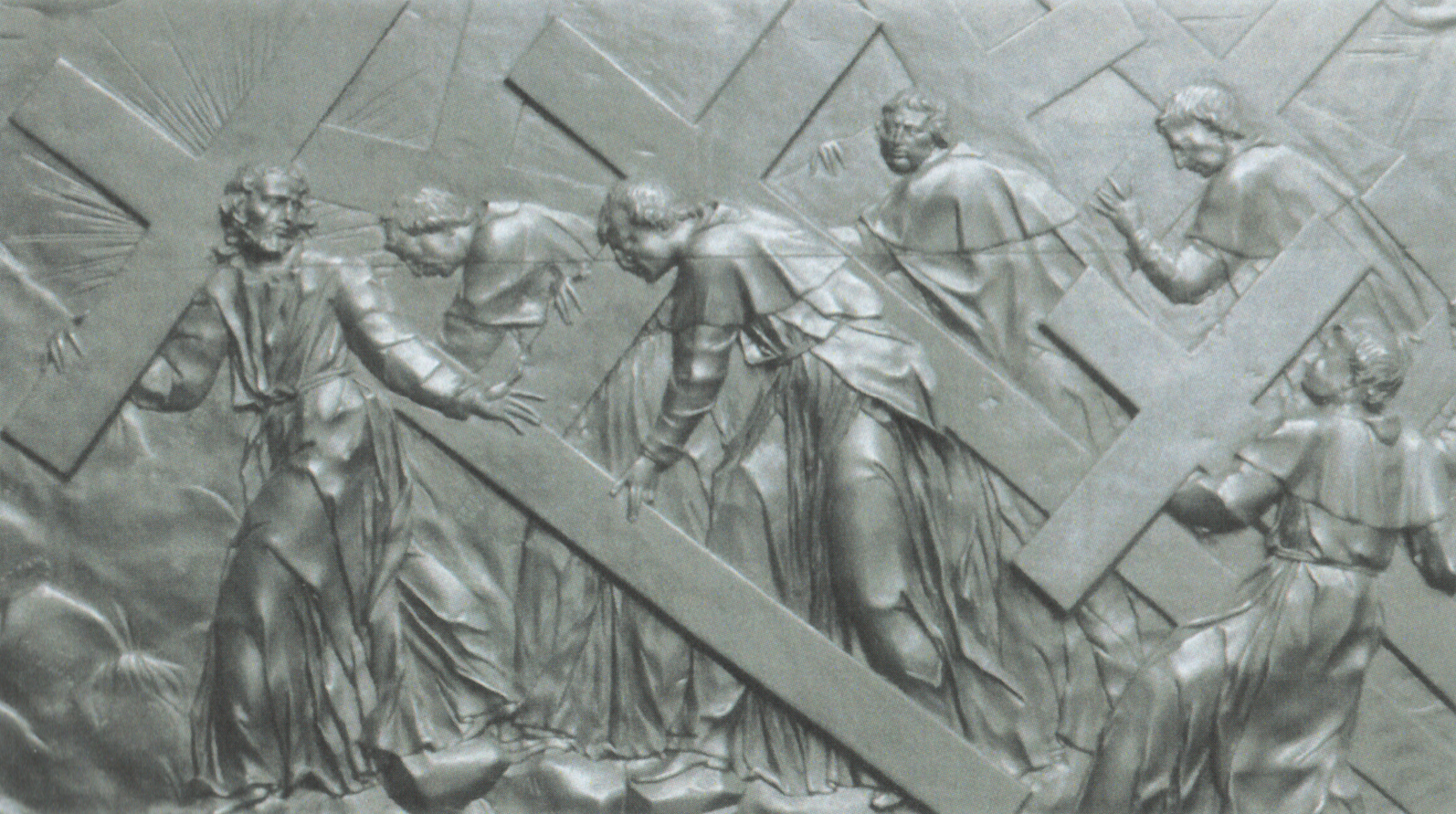
“We exhort you, dearest brethren, to be most diligent in the service of God, to Whom you have consecrated yourselves by the profession of special vows. Having of your own free will and purely for the love of God renounced your earthly possessions as well as your very selves, you are obliged to carry the Cross of Christ on your shoulders daily, that is: to bear patiently the continued difficulties of various sufferings while dedicating your entire life to penance. This indeed is the narrow road to heaven which leads those who walk it perfectly to their true homeland. This is the way which Jesus Christ vigorously manifested to you long ago in His life and death, in His words and deeds. Unless you approach this narrow road with confidence, and walk it to the best of your ability, you cannot come to Christ....”
— From the “Sermon of our Holy Father St. Norbert, Archbishop of Magdeburg and Founder of the Order of Prémontré, to His Brothers”