

O Crux
from the Office for the Feast of the Exaltation of the Holy Cross
(September 2026)
Right click here to download audio

How can we say that God exists when there is so much suffering in the world?
“If God were all-good,” most of us have heard at one time or another, “He wouldn’t want there to be evil; and if He were all-powerful He wouldn’t allow it. But there is both evil and suffering — so either God isn’t good, or He isn’t powerful, or He doesn’t really exist.”
When we look out into the world and see so much suffering, when we look into our own lives and see the loss and pain we ourselves experience, it can be so easy to fall into this temptation.
The feast of the Exaltation of the Holy Cross commemorates the dedication of the Church of the Holy Sepulcher in Jerusalem in the year 325 AD, wherein the relics of the true Cross, found in the year 320 AD by St. Helena, are kept and venerated. But that church itself, having existed for so many years in the midst of war, hatreds, and division, also raises the question: if God really became man, why is there still so much conflict?
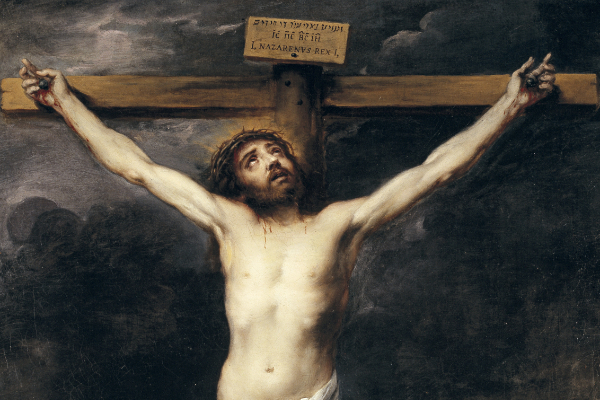
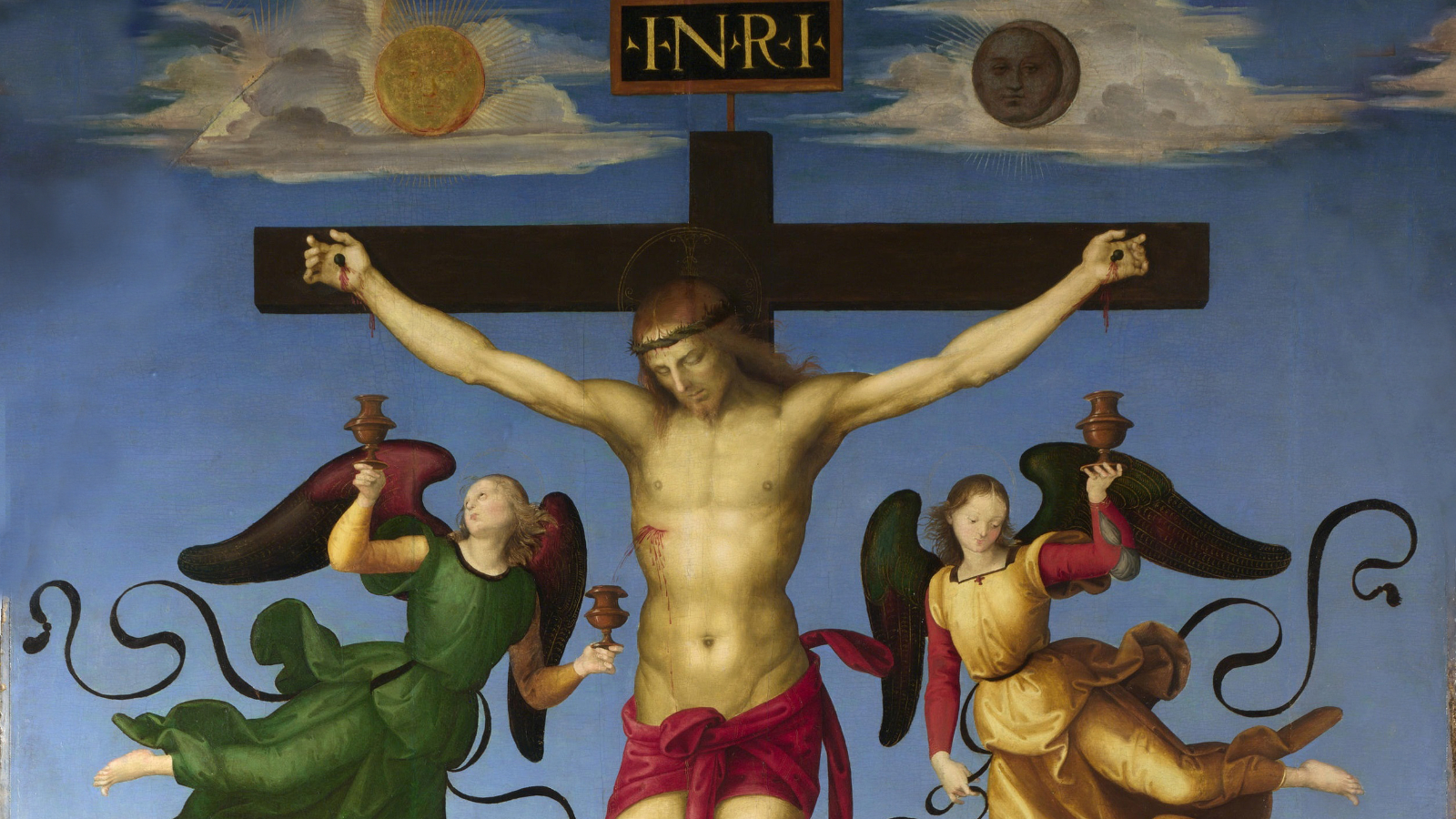
And to all these questions, the Cross provides the answer.
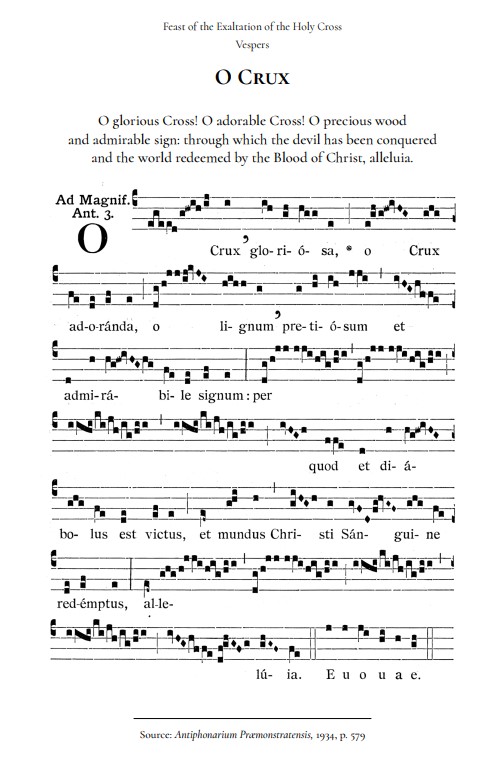
“O glorious Cross! O adorable Cross! O precious wood and admirable sign: through which the devil has been conquered and the world redeemed by the Blood of Christ, alleluia.”
“People have often asked me how God could permit such injustice. How could God allow his own priests to endure such misery and suffering?… One glance at the Cross of our Lord and redeemer surely provides us all with the only true answer.”
So writes a Jesuit priest, Rev. John M. Lenz, S.J., his beautiful memoir, Christ in Dachau (or Christ Victorious), in which he recounts his harrowing six and a half years as a prisoner in the concentration camps of Nazi Germany. Like the responsory for this month, his account is far from bitter or resentful, but sheds light on the healing power of the Cross.
The Cross no longer stands as an instrument of torture and death — it is a sign and symbol of the perfect love of God for each soul and is the path by which we find Him at last.
“There was one way, only one, out of our desperate situation, and that was to place all our confidence in God and to trust in his providence and mercy. And it was true that every one of us in Dachau who believed in God was in fact brought nearer to Him. This was the salvation — for body and soul — for thousands in the various camps of the Third Reich.”
Through Christ’s act of love on the Cross, the power of death is conquered — not by ridding us of suffering but by redeeming it.
“There was one way, only one, out of our desperate situation, and that was to place all our confidence in God and to trust in his providence and mercy. And it was true that every one of us in Dachau who believed in God was in fact brought nearer to Him. This was the salvation — for body and soul — for thousands in the various camps of the Third Reich.”
The responsory, O Crux, seems to illustrate this through its intricate melody — it is triumphant yet solemn, sweet yet sorrowful. Suffering and evil still exist in the world, but God is not absent from this. Paradoxically, through hardships, suffering and pain we come closer to Him.
“Six and a half years behind barbed wire was a bitter price to pay in order to be able to hold on to God. But for the same result I would again joyfully face prison, hunger and death...”
In the responsory, the word “per” (“through” in English) is held out longer than any other word, as if to call our minds to this fact: it is through the Cross that we find God, through the Cross that the devil is defeated, through the Cross that the world is redeemed — not in spite of evil, but, mysteriously, by its instrumentality. The Cross, more than any other means, conforms us to Christ and to his act of redemption, which is even now freeing souls from the death of sin.
His love, signified by the Cross in each of our lives, can free us too if we place all our confidence in Him and trust in his providence and mercy.
“And I, when I am lifted up from the earth, will draw all people to myself.”
(John 12:32)