

Saint Godfrey
Feastday: January 14
“Jesus, looking at him, loved him and said to him, ‘…Go, sell what you have and give to the poor, and you will have treasure in Heaven; then come, follow Me.'”(Mark 10:21)
|
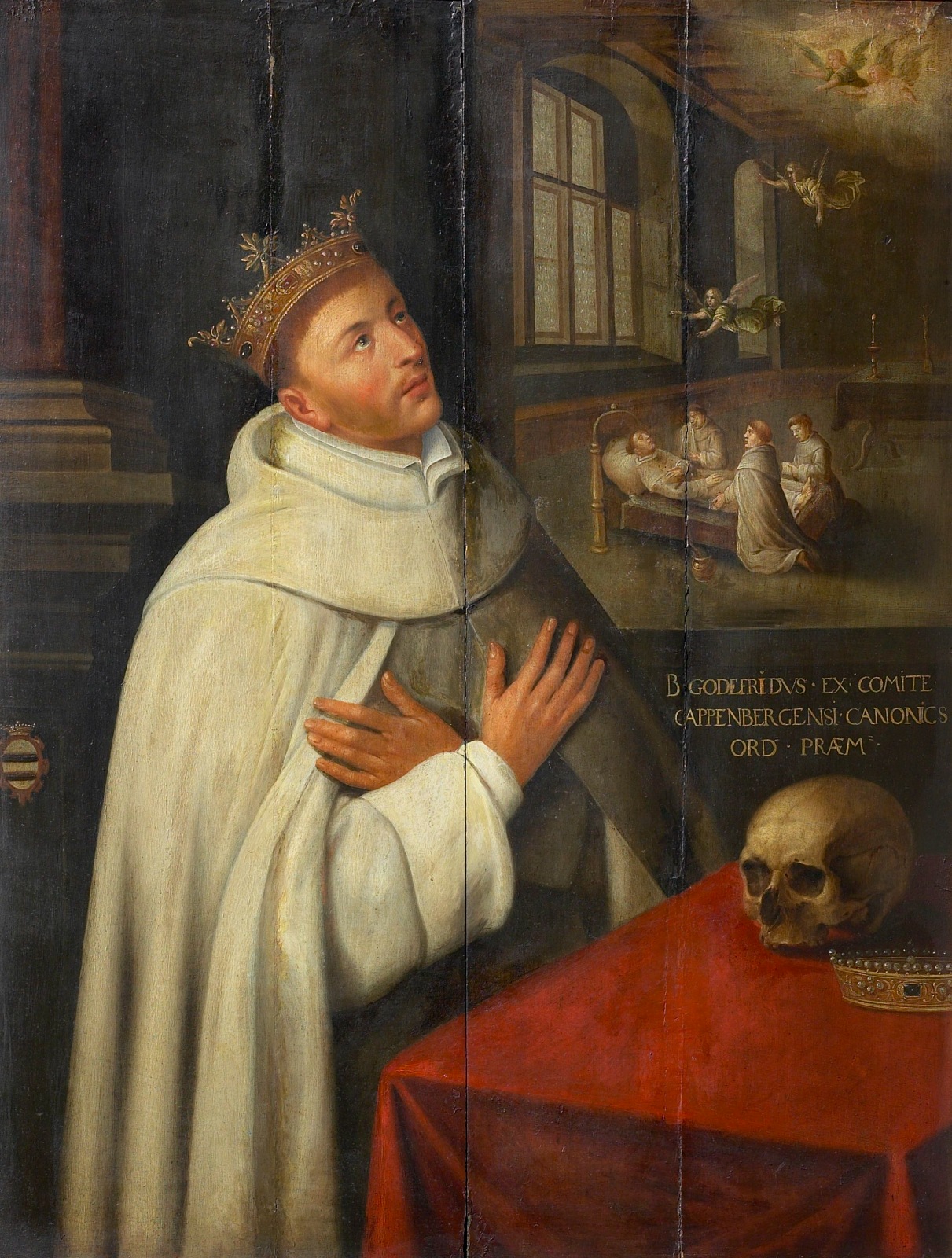
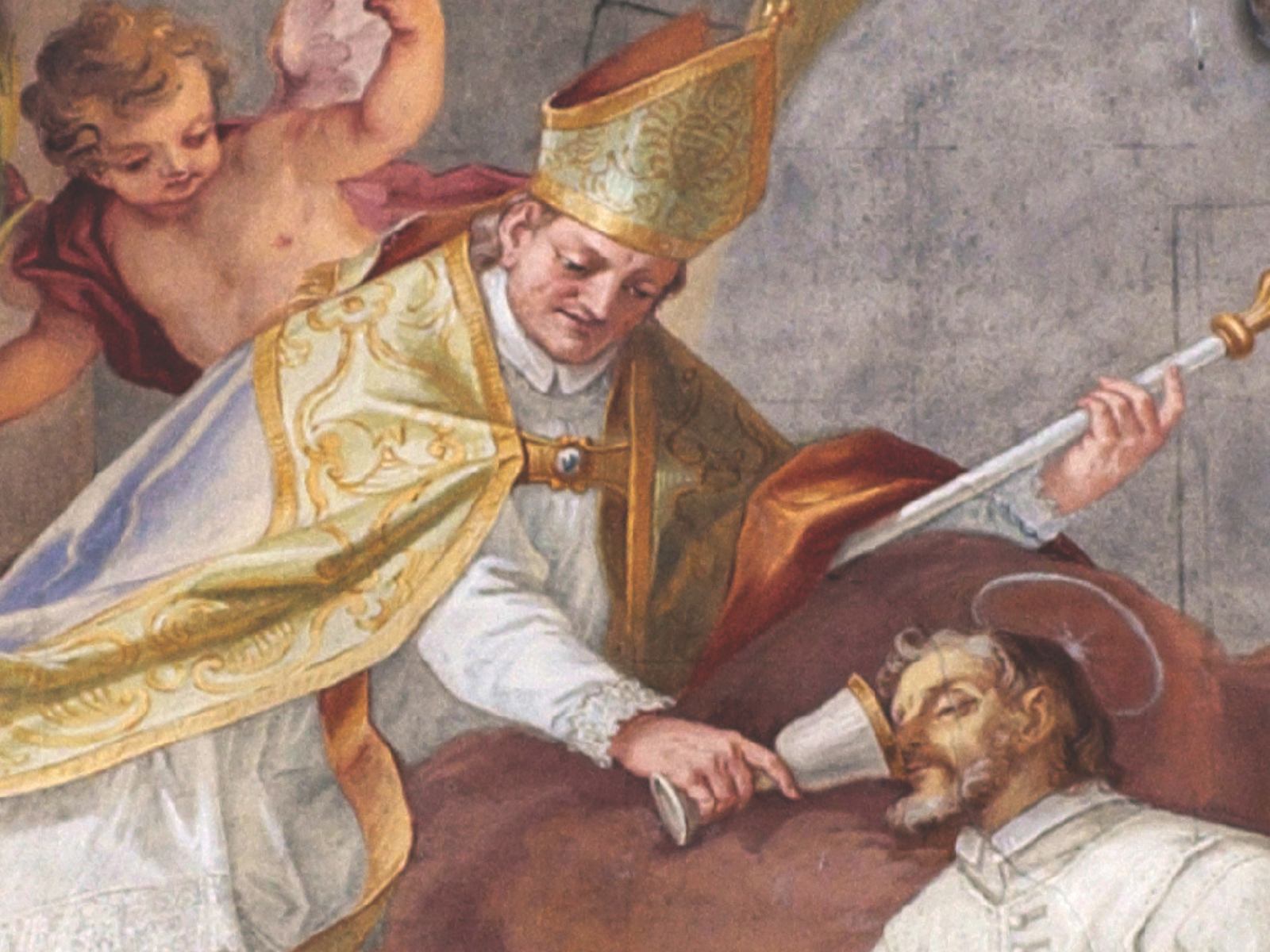
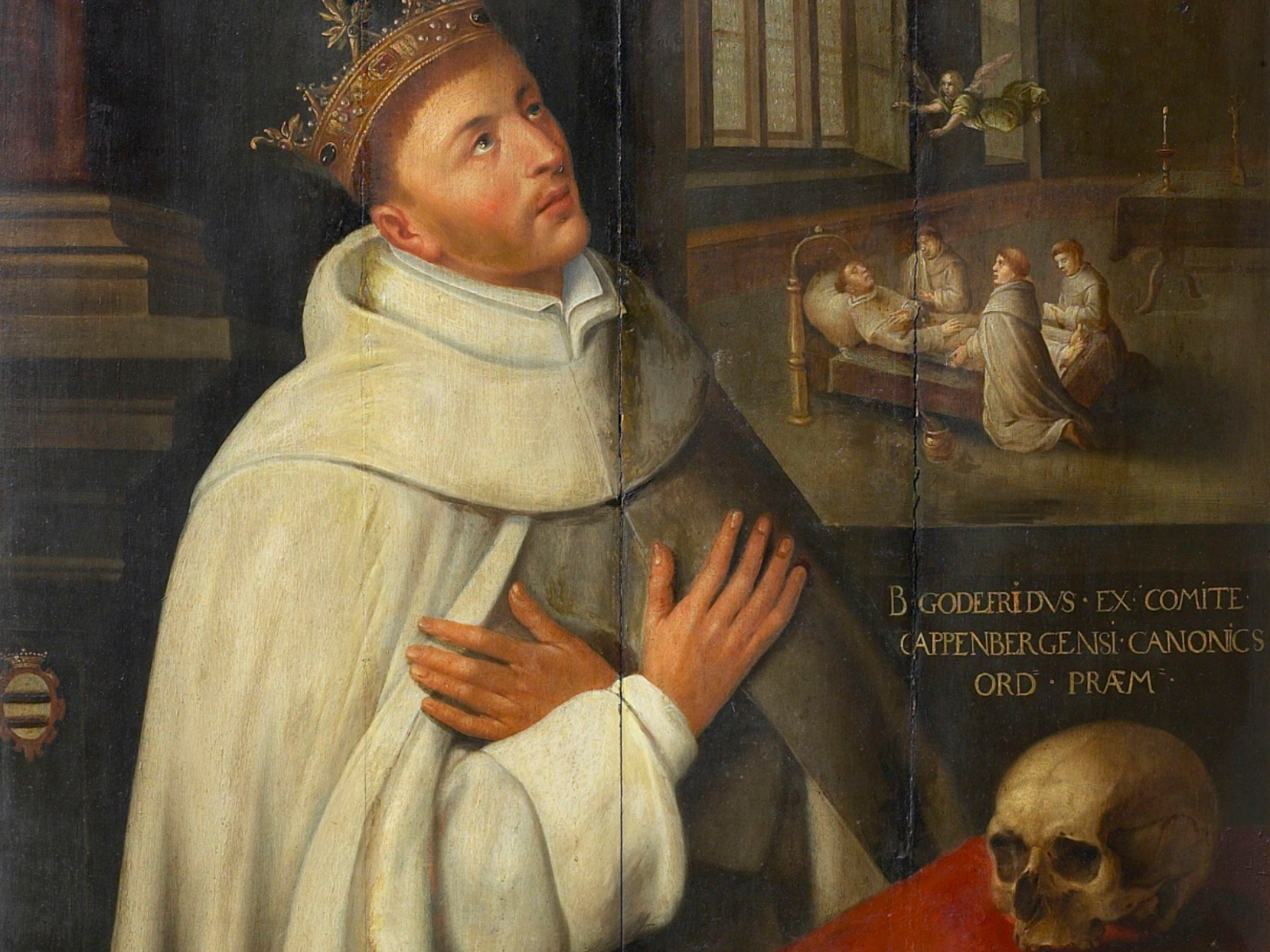
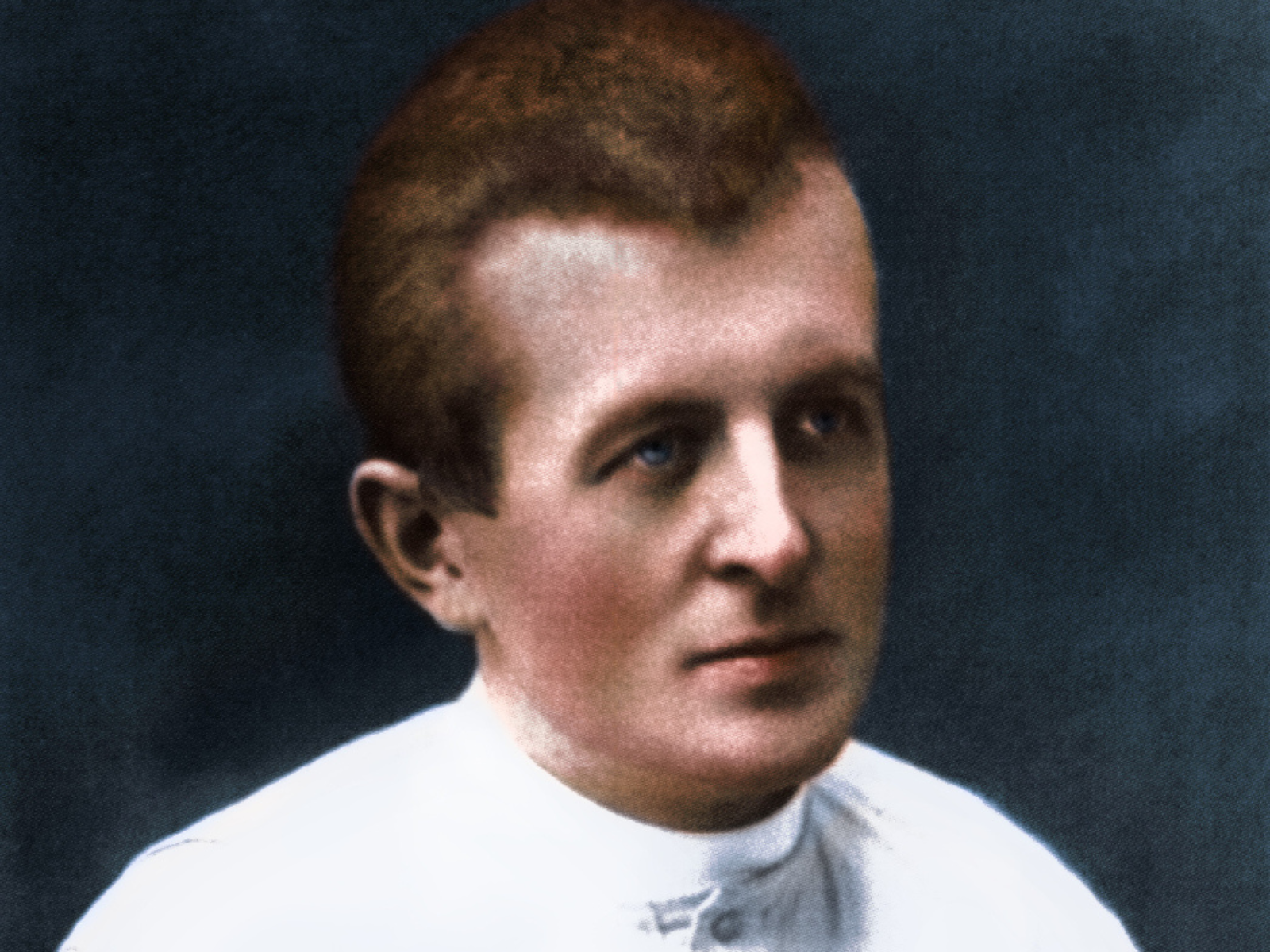
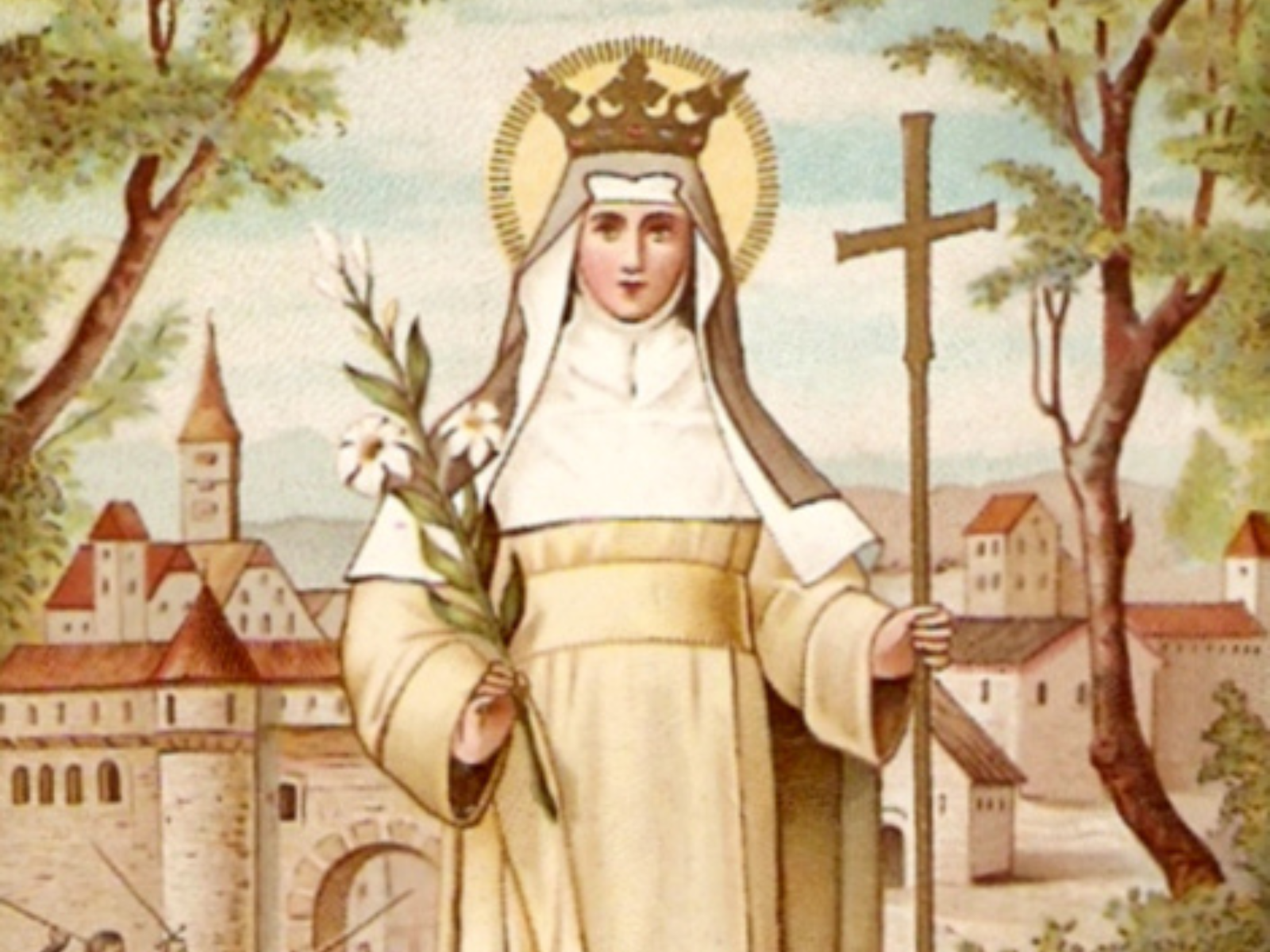
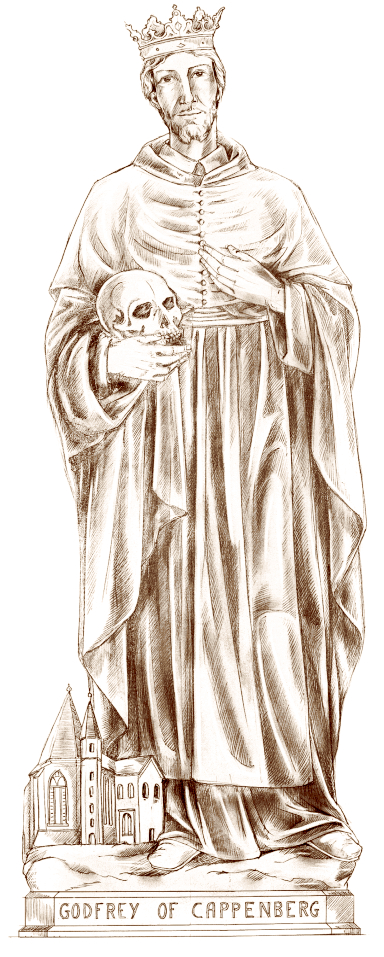
Godfrey became a lay brother in his own castle-monastery at Cappenberg, and was known for his great humility and charity. He refused to allow anyone to call him by his secular title of count, contenting himself with performing the lowliest tasks for his brethren and serving the poor who came to the monastery for alms. He loved to contemplate the beauty of the next life and disdained the illusory pleasures of the present one. After St. Norbert became archbishop, he summoned Godfrey to be with him at Magdeburg. This was a great trial for Godfrey as he could not get used to life at the episcopal court. He became seriously ill, so Norbert sadly allowed him to leave. Upon arriving at Ilbenstadt, one of the abbeys he had founded, Godfrey surrendered his soul to God whom alone he loved. He was barely thirty years old. Godfrey is pictured with the crown of nobility which he renounced for the sake of Christ, and with a skull of penitence recalling his severe trials, his longing for death, and his hope in the kingdom of heaven for which he renounced all earthly glory. (Saint drawings courtesy of Saint Norbert Abbey, De Pere, Wisconsin.) |
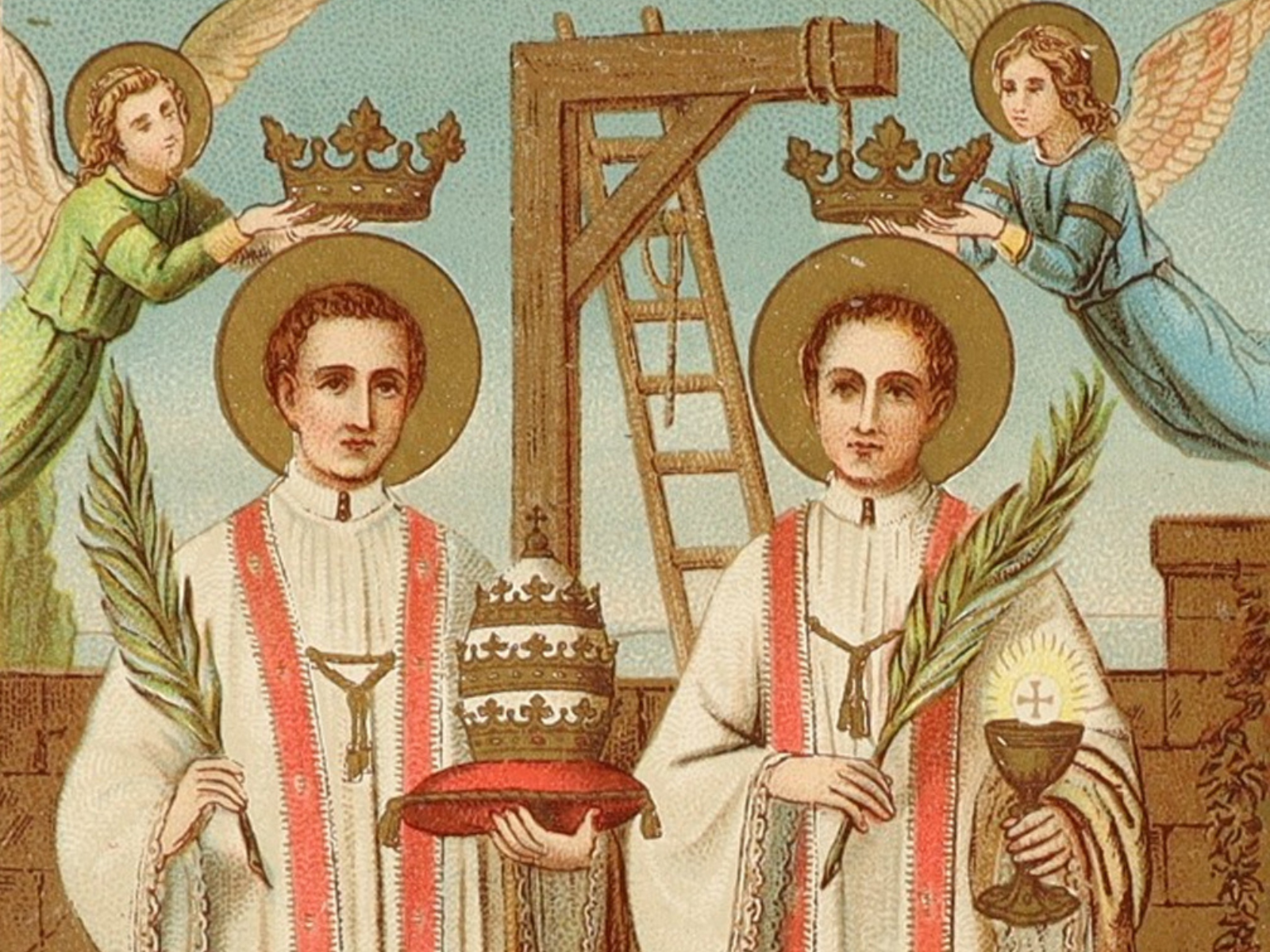
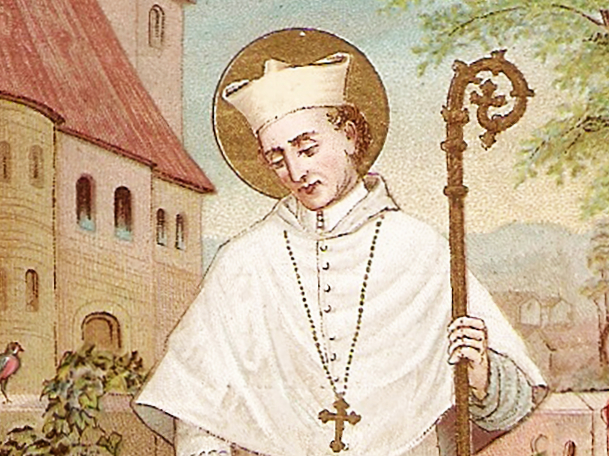
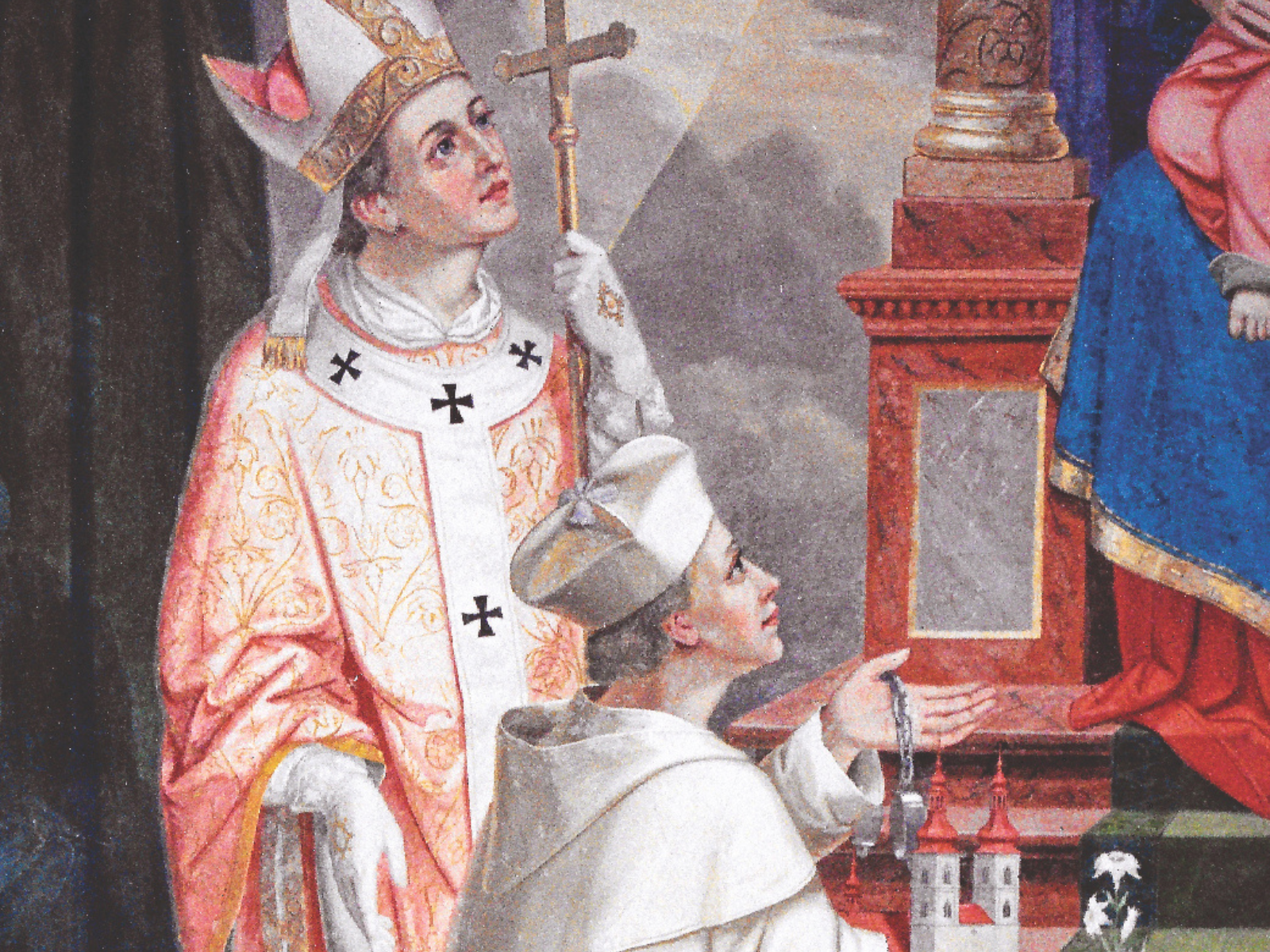
 Unlike the rich young man in the Gospel, Godfrey left everything to follow Christ. Born in 1097, Godfrey was count of Cappenberg in Germany and married to a woman of rank named Judith. In 1121, after a battle with imperial forces in which his army was primarily responsible for the burning of Munster and its cathedral, a disillusioned and remorseful Godfrey was moved to compunction and penitence. He decided to turn his castle into a monastery, and even desired to become a religious himself. At about the same time, he met St. Norbert, who accepted his offer of Cappenberg’s castle, which became the first Norbertine foundation in Germany. His wife, Judith, and his brother, Otto, initially resisted the idea, but eventually both became Norbertines themselves, and additional Norbertine monasteries were founded on Godfrey’s properties of Varlar and Illbenstadt. The most implacable opposition came from Jutta’s father, Frederick, who even besieged the new monastery of Cappenburg, and threatened the life of both St. Godfrey and St. Norbert.

"Almighty God, who strengthened St. Godfrey, so that, despising everything he possessed, he might happily attain to You, grant that we too, renouncing the riches of the world and its glory, may find our Lord Jesus Christ, Your Son, Who lives and reigns with You in the unity of the Holy Spirit, one God forever and ever. Amen."
– Prayer in honor of Saint Godfrey